


TL;DR: An ottoman works best in a Lagos living room when its job, size, upholstery and movement are decided before its shape or colour.
Key takeaways
- Decide whether the ottoman is primarily a footrest, extra seat, soft table or storage piece.
- Mark its full footprint while the sofa, doors and main walking routes are in use.
- Check the top, frame, upholstery, base and load guidance for the exact model.
- Put trays, castors, storage hinges and care requirements into the written specification.
- Verify the packed delivery route and the condition-check process before ordering.
What is an ottoman actually for?
An ottoman can serve as a footrest, occasional seat, soft coffee-table alternative or storage piece, but the chosen model should be specified for the job. Similar-looking pieces can have different structures, tops and intended uses.
Start by ranking the uses. If feet-up comfort is first, test the height and distance from the sofa. If serving is important, decide how a stable tray will sit. If occasional seating matters, ask the supplier to confirm that use and any applicable load guidance.
One small upholstered rectangle cannot automatically be a seat, table, storage chest and spare room. Furniture is talented, but it appreciates a brief.

How large should an ottoman be?
The ottoman should be large enough for its main task while leaving the room's normal circulation clear. Measure it with the sofa, side tables, doors and seated users in their working positions.
Use masking tape to mark the proposed outline on the floor. Sit on the sofa, extend your legs, move around the setting and open every nearby door or drawer. A floor plan can confirm geometry, but walking the route exposes where knees, corners and carrying paths actually meet.
FCI Nigeria's sofa seat depth guide separates usable sitting space from overall furniture depth. Apply the same discipline here: comfort dimensions and room footprint are two different checks.
Should it match the sofa?
An ottoman does not need to match the sofa, but its scale, height and material should look deliberate beside it. A matching piece can make a sectional composition feel calm, while a contrasting piece can add colour or texture.
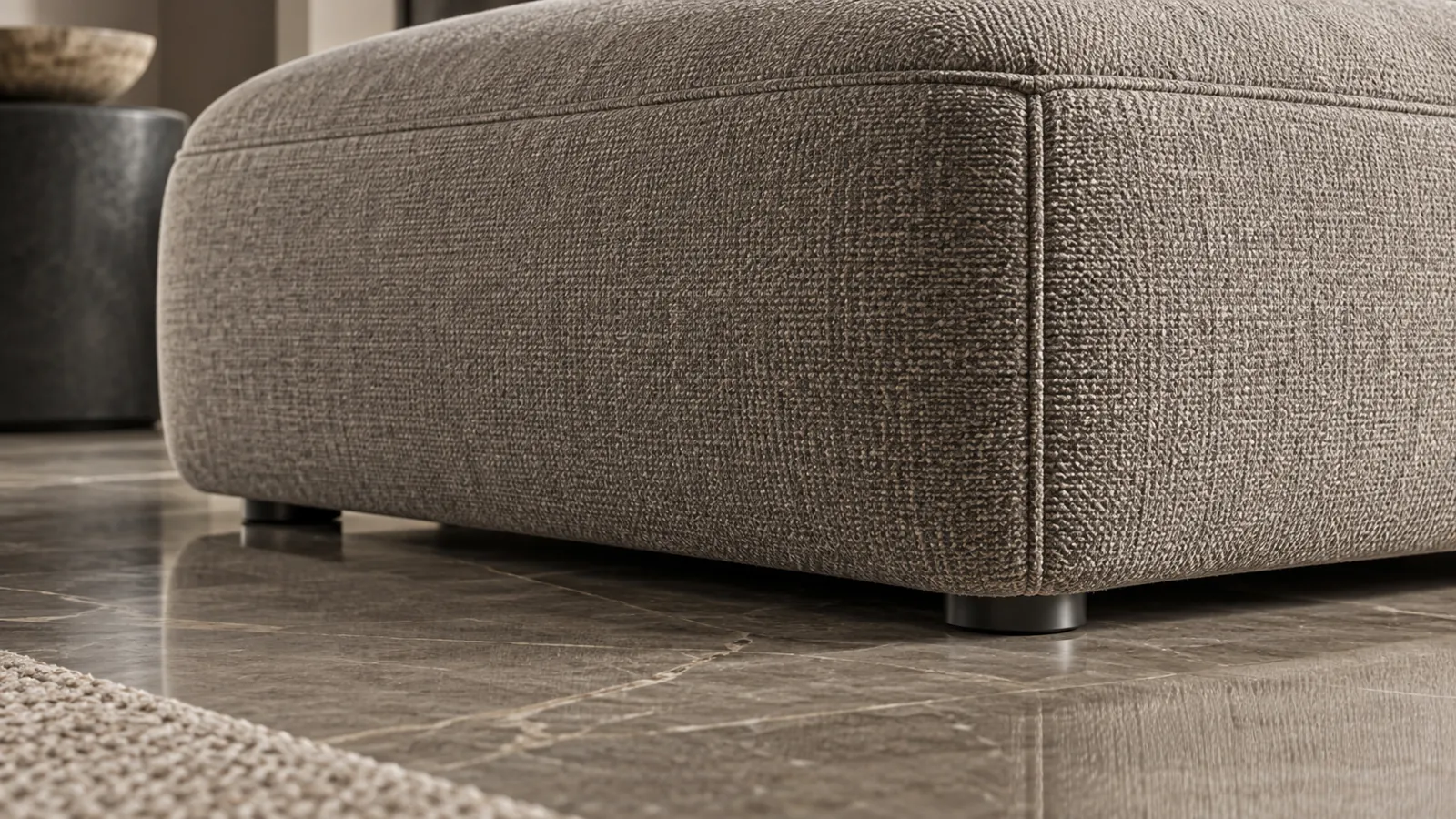
Compare physical samples in the room's daylight and evening lighting where possible. Record the exact fabric or leather code, stitching, piping, leg or base finish and orientation of any pattern. Words such as beige, velvet or leather are descriptions, not specifications.
If the ottoman will move frequently, consider how the material handles hands, footwear, serving trays and everyday cleaning. Ask for the maker's care instructions before choosing the palest swatch in the room.
Can an ottoman replace a coffee table?
An ottoman can replace a coffee table for soft, informal use, but it is not automatically a stable surface for every object. The top construction, cushioning and shape determine how a tray behaves.
Test the actual surface rather than assuming a photograph proves stability. Confirm whether a tray is included or needs to be sourced separately, and measure where it can sit without balancing on seams or deep buttoning.
Hot items, spills and heavy decorative objects need material-specific guidance. A removable tray can add flexibility, but it does not turn upholstery into stone. Use the supplied care instructions and keep vulnerable objects away from edges.
Is storage worth adding?
Storage is worth adding when the internal space has a named purpose and the lid can open safely in the planned position. Measure the items to be stored, then ask for usable internal dimensions rather than only the outside size.
Check the hinge or lift mechanism, opening direction, finger clearance and ventilation needs for the contents. The lid must clear the sofa, table and wall. If children use the room, ask the supplier about the exact mechanism and safe-use instructions rather than relying on a generic soft-close label.
Storage is useful when it removes real clutter. An empty compartment bought because hidden storage sounds virtuous is simply a more complicated footstool.
Should an ottoman have feet or castors?
Choose the base according to how often the ottoman will move, the flooring and the need for stability. Fixed feet can make the piece feel settled, while suitable castors or glides may help a frequently reconfigured room.

Ask whether the base suits the finished floor and whether separate protection is recommended. Test movement with the ottoman empty and in normal use. A piece that rolls beautifully in a showroom may behave differently on a thick rug or across a floor transition.
For a larger furniture package, FCI Nigeria's pre-order checklist recommends recording operating space, service positions, packed dimensions and installation responsibilities before release. Those checks matter even for a small item when access or finish is sensitive.
What belongs in the order specification?
The order specification should identify the model, dimensions, intended use, upholstery, trim, base, opening mechanism and included accessories. It should also state packed dimensions, delivery scope, care information and warranty documents.
Photograph the approved sample and keep the item code with the order acknowledgement. If the supplier's acknowledgement changes a dimension, fabric code or base option, reconcile it before production or dispatch.
On delivery, compare the piece with the written order. Check stability, seams, alignment, mechanism movement, finish and transit marks before the crew leaves where practical.
Limitations
This is a room-planning and buying guide, not a structural, child-safety or accessibility assessment. It does not establish the load capacity, fire performance, cleaning method or suitability of any specific ottoman. Those facts must come from the current supplier and manufacturer documentation for the exact model.
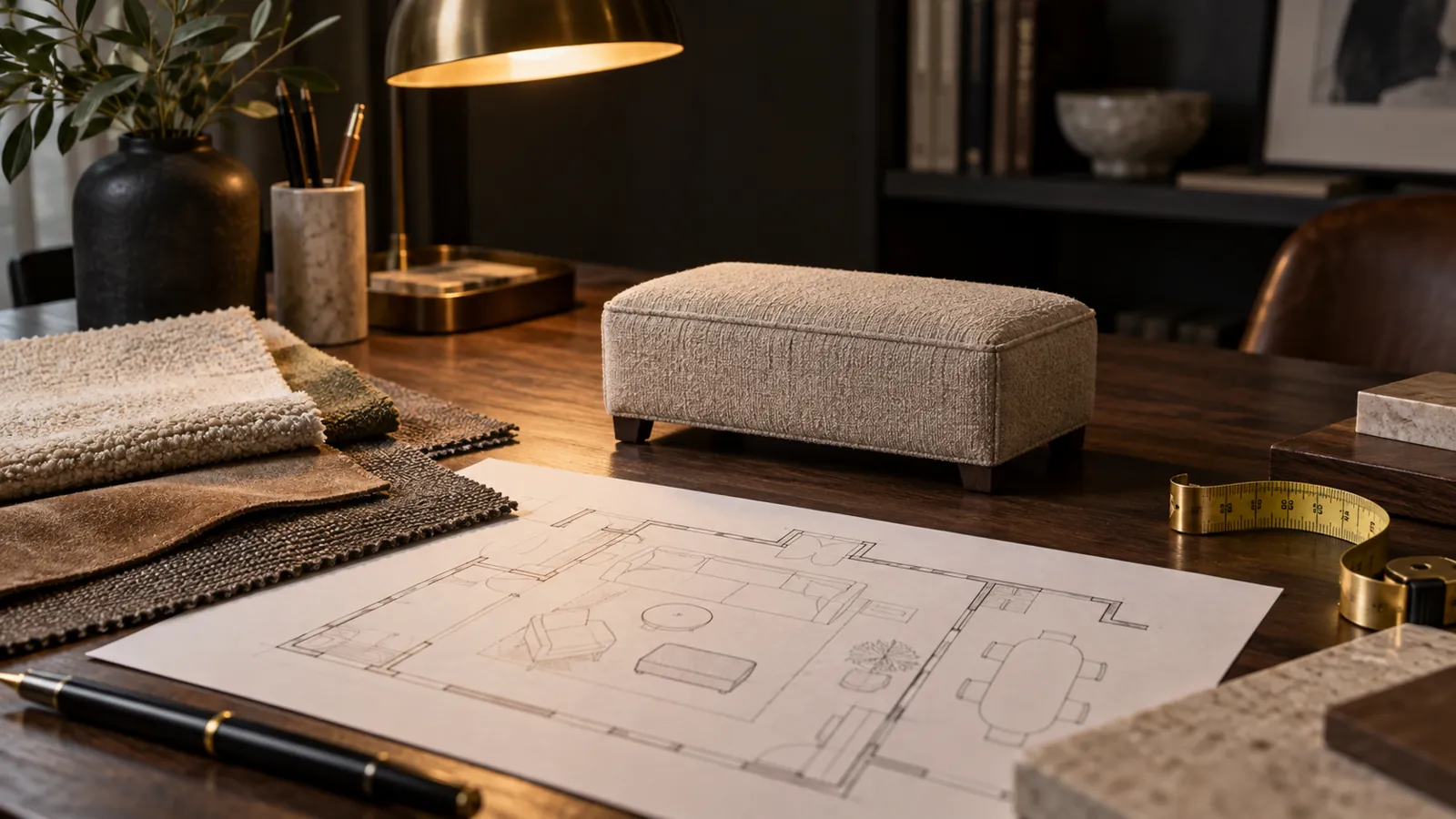
Generated illustrations are design concepts, not verified FCI products, customer homes or construction drawings.
What should you send FCI Nigeria?
Send the room dimensions, sofa details, photographs, preferred uses and delivery route. Start at FCI Nigeria and ask for an ottoman shortlist whose written specifications match the room rather than choosing from colour alone.
Sources
- FCI Nigeria, FCI Nigeria. Current furniture, interior design and project-service overview.
- Sofa Seat Depth: Find Your Fit, FCI Nigeria. Published guide to separating comfort measurements from overall footprint.
- Luxury Furniture in Lagos: The Pre-Order Checklist, FCI Nigeria. Published guide to specifications, access, delivery and acceptance controls.
Get in touch
Want to get in touch? We'd love to hear from you. Email us at [email protected]
Sign Up for Newsletter