

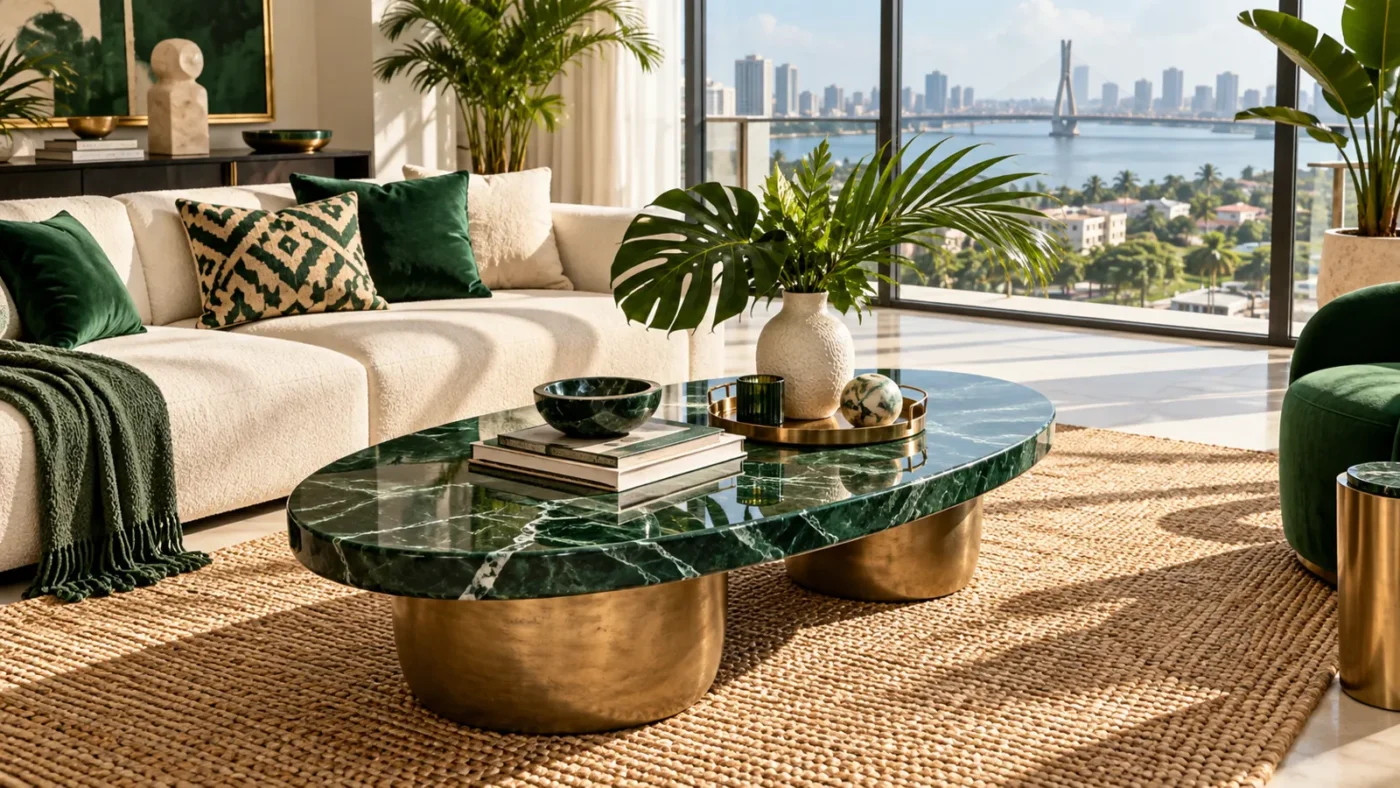
TL;DR: A coffee table works when its size, shape and material suit the sofa arrangement while leaving comfortable routes through the Lagos living room.
Key takeaways
- Measure the seating group and walking routes before choosing a coffee table.
- Match the table shape to how people move around the sofa, not only to the room style.
- Check the usable surface, edge profile, base position and any drawer or nesting movement.
- Ask for exact material, finish and care instructions for the chosen model.
- Confirm packaged dimensions and the complete delivery route before ordering.
How large should a coffee table be?
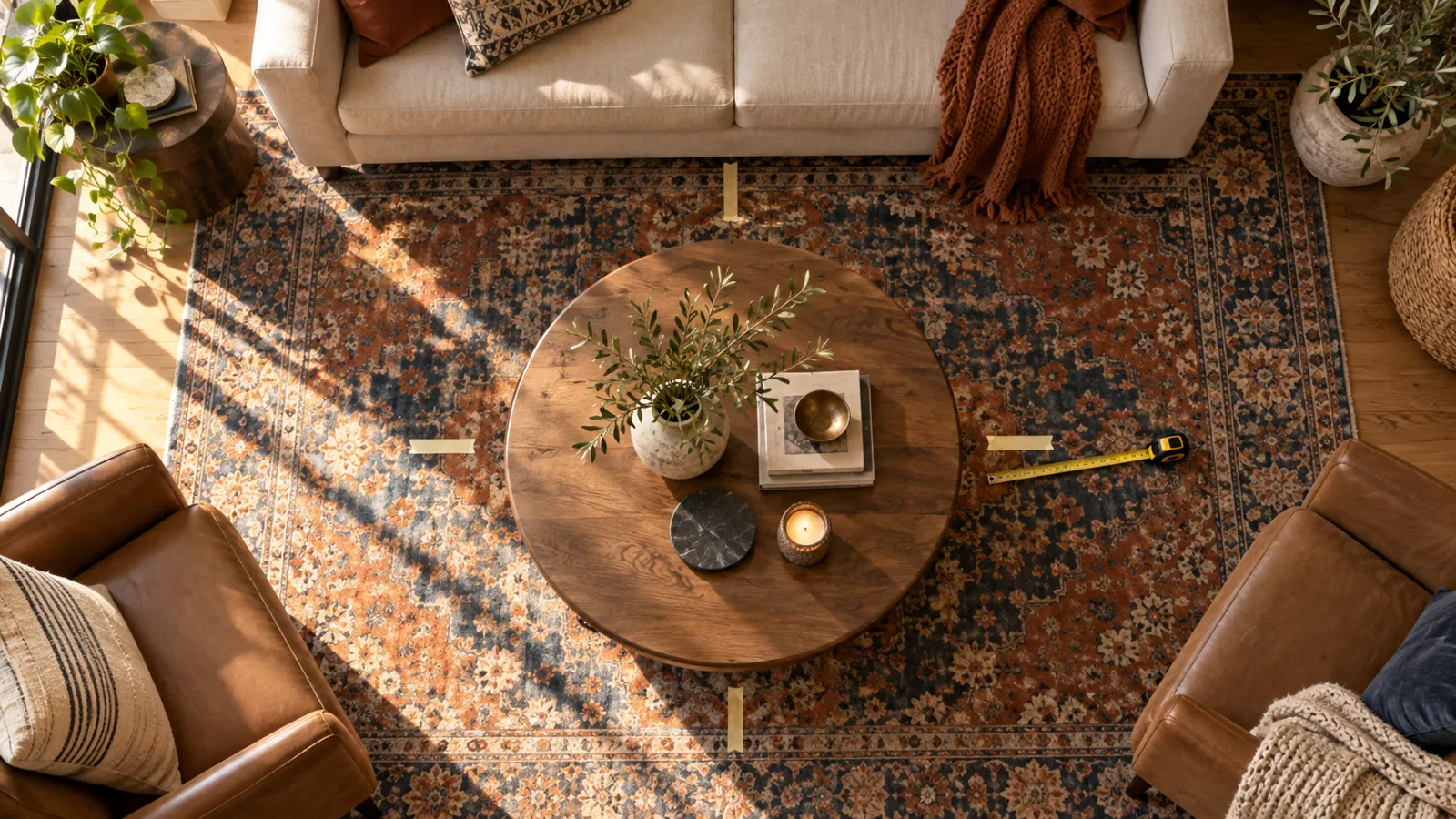
A coffee table should feel connected to the seating without filling the route between the sofa and the rest of the room. Measure the open area inside the seating group, then mark the proposed table footprint on the floor.
Test the position from every regular seat. People need to reach the surface without repeatedly leaning across a deep gap, but they also need room to stand, turn and pass. The right answer depends on the actual sofa depth, chair positions and traffic route.
Use the finished room plan, not an isolated product photograph. A table photographed in a vast studio has never had to negotiate with your armchair, rug and sliding door.
Which coffee table shape suits the sofa?
The best shape follows the geometry of the seating and the way people circulate. A long rectangular table can suit a straight sofa, while a round or oval table may soften movement around a compact grouping.
A square table can anchor a broad U-shaped arrangement, but its corners and depth need space. Nesting tables can spread out when guests arrive and tuck together afterwards, provided both the open and closed arrangements have been measured.
The published nesting tables Lagos guide explains how to check overlap, stability and usable height. Flexibility is helpful only when the smaller table can actually emerge without meeting a knee or rug edge.
How should table height relate to seating?
Compare the table height with the seat cushion height of the exact sofa and chairs. The surface should be comfortable for the activities planned, whether that is serving drinks, holding books or supporting a tray.
Do not measure against an empty sofa frame. Cushion compression and the way people sit change the practical relationship. If the room includes low lounge seating and upright occasional chairs, one table height may not serve every seat equally well.
An ottoman may be an alternative where a softer central piece or extra seat is more important than a hard surface. Our ottoman Lagos guide separates those uses and explains why a tray does not magically turn every upholstered top into a stable table.
Which material is practical in Lagos?
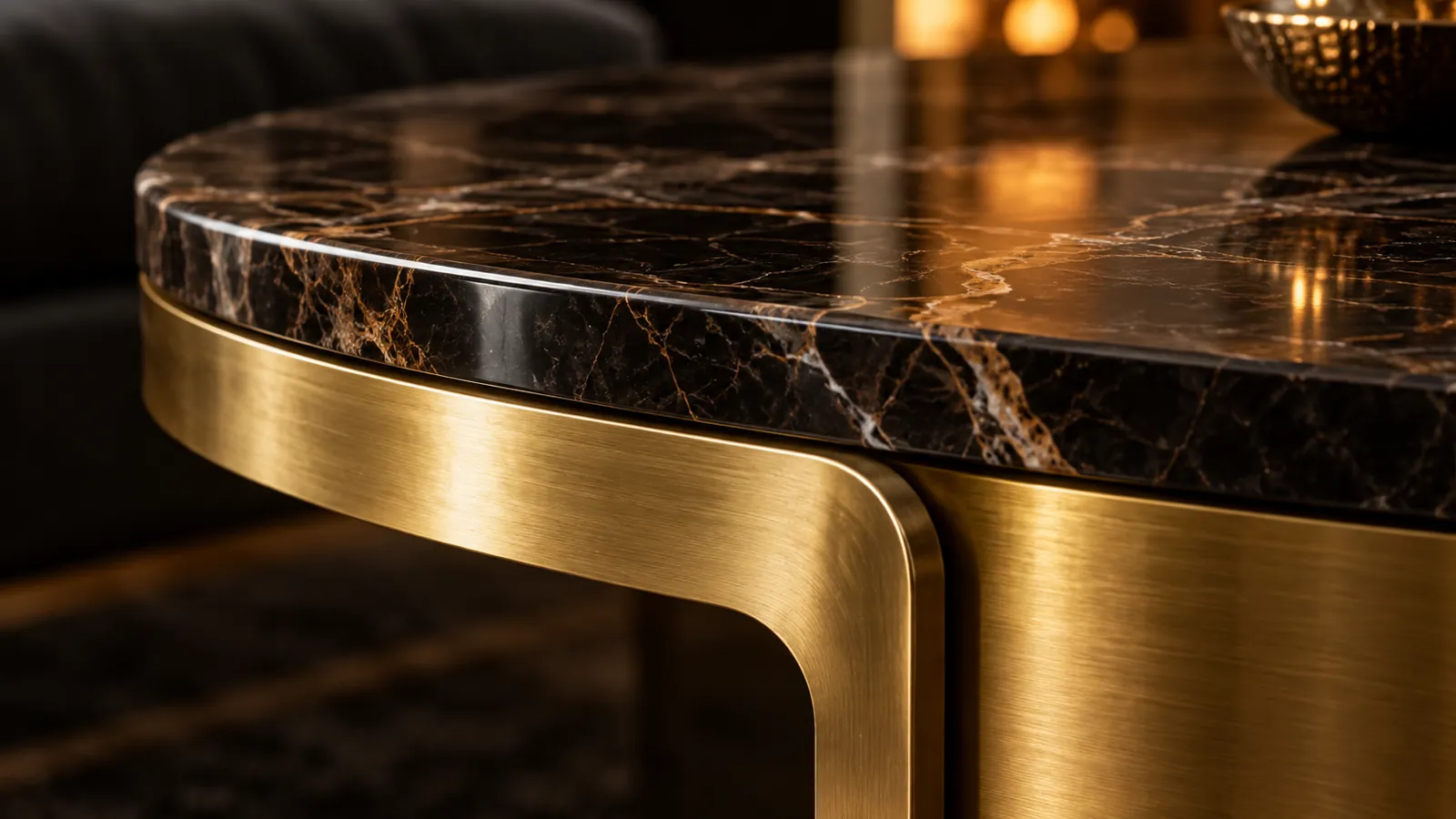
Choose the material by appearance, use and maintenance. Stone, glass, wood, ceramic and metal each have different edge details, surface behaviour and care requirements.
Ask whether a stone is natural or engineered, whether glass is tempered, how wood is sealed and which cleaners are allowed. Request a current sample where colour and pattern matter. Natural variation should be agreed as a characteristic, not discovered during installation like an unplanned plot twist.
Humidity, air conditioning, sunlight and everyday spills can all affect ownership. The relevant evidence is the maker's specification and written care guide for the exact table, not a broad promise that the material is luxurious.
Does the base leave enough room?
The base should support the table without obstructing feet, knees or nearby seating. Check where legs, plinths or sculptural supports sit beneath the top.
A dramatic centre base may improve access around the perimeter, while splayed legs can extend beyond what the top view suggests. Look at the table from sitting height and ask for drawings of both the top and base footprints.
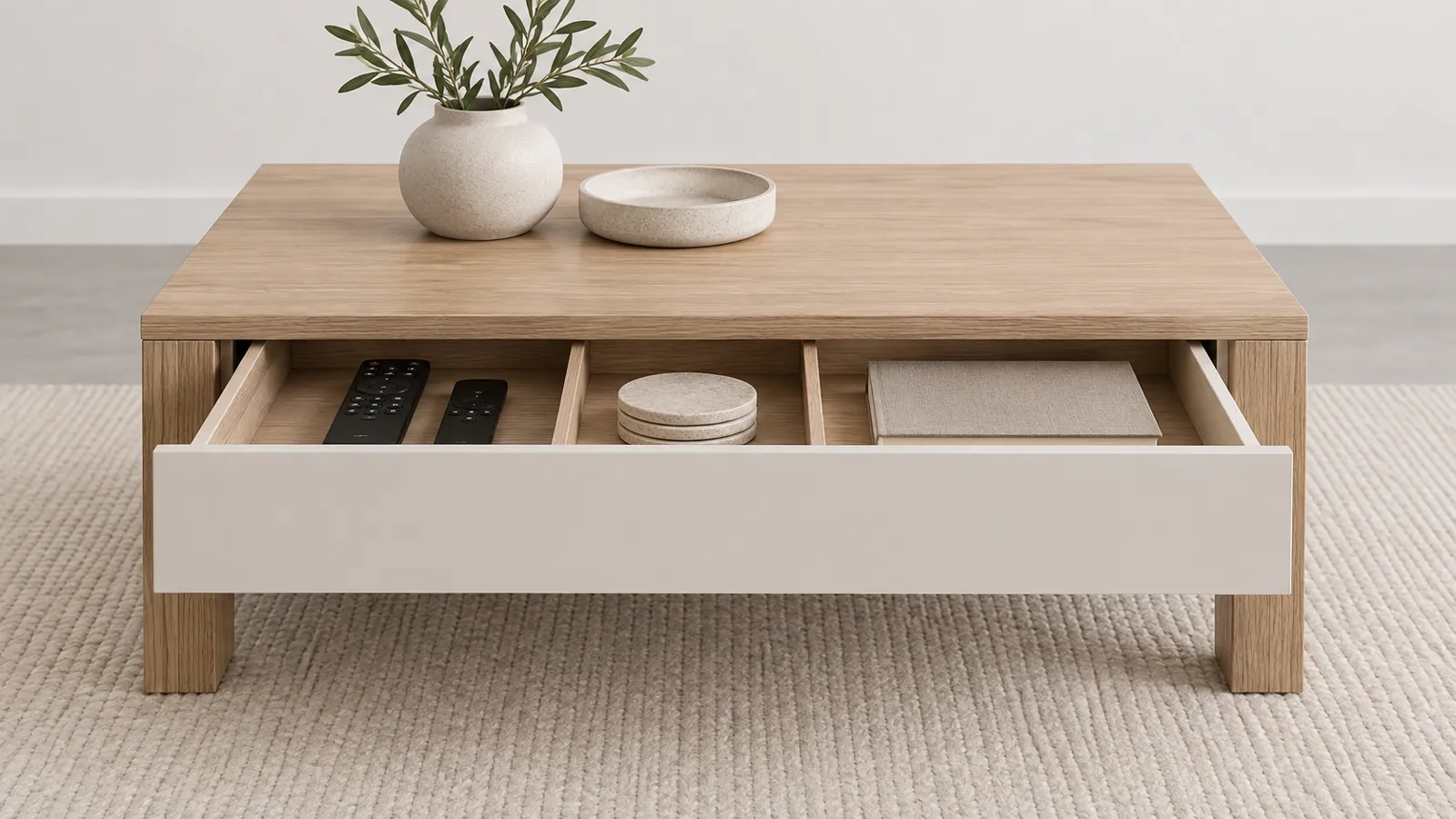
If the table has drawers, lift-up storage or rotating sections, mark their full movement. Storage is only useful when it opens after the sofa is installed.

What should you inspect before ordering?
Inspect the edge profile, joints, finish consistency, stability and care information. For stone or glass tops, ask how the top connects to the base and whether specialist assembly is required.
Record the exact model, dimensions, finish, material, quantity, delivery scope and approved sample on the order. If several tables form a set, record every component rather than relying on the collection name.
FCI Nigeria's current luxury furniture service covers imported collections and full-room schemes for Lagos and Abuja homes. Take the sofa dimensions, room plan and photographs to the consultation so the table can be judged as part of the room.
Will the table fit through the delivery route?
The packaged table and its largest non-removable component must fit through the route. Measure entrance doors, lift openings, corridors, stair turns and the final room doorway.
Ask whether the top and base travel separately, who assembles them and how floors will be protected. Heavy stone, glass or metal pieces may need a planned team and method rather than optimistic improvisation.
For project advice, use the verified FCI Nigeria contact page with your room dimensions and shortlist.
Limitations
This article provides room-planning questions, not a model-specific recommendation. Dimensions, construction, care, stability, warranties and delivery methods vary by product and manufacturer.
Confirm the technical sheet, approved finish sample, written care instructions, quotation and access plan for the exact coffee table before purchase.
Get in touch
Want to get in touch? We'd love to hear from you. Email us at [email protected]
Sign Up for Newsletter