

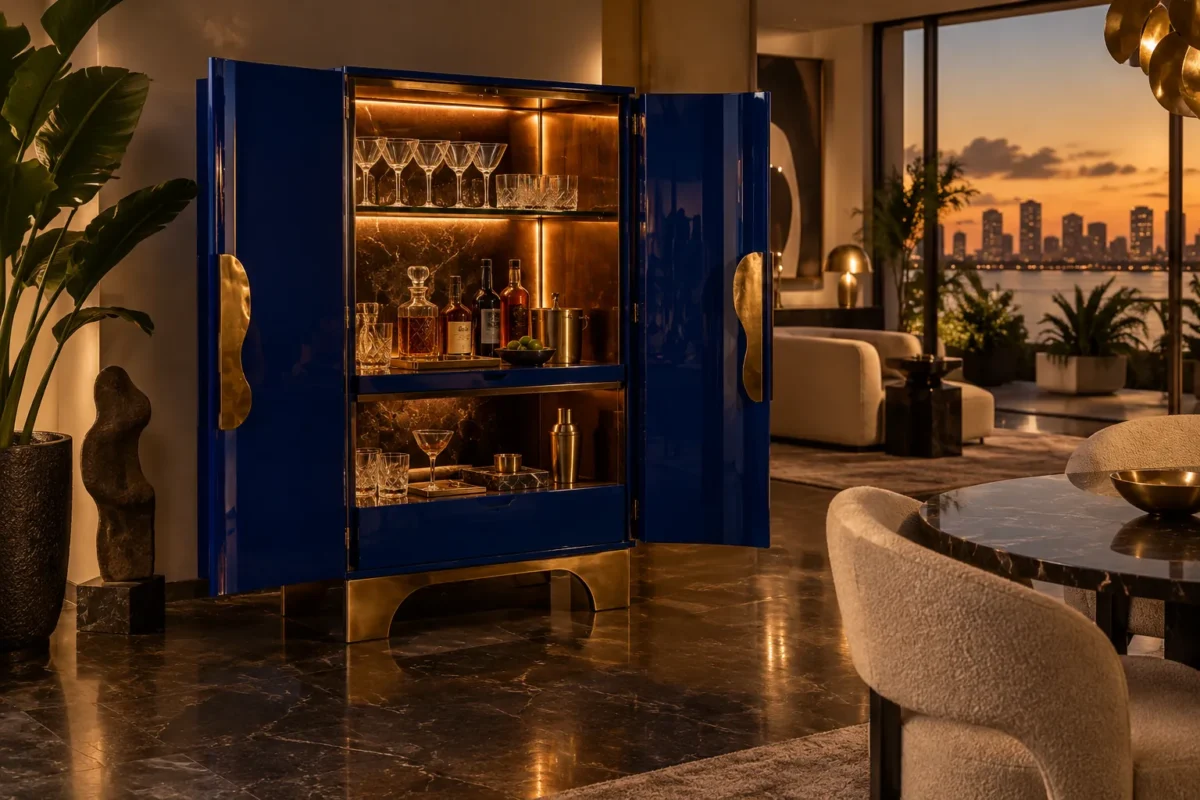
TL;DR: Choose a bar cabinet by inventorying what it must store, then planning serving space, door movement, lighting, power, cleaning and delivery as one brief.
Key takeaways
- Count bottles, glasses, tools, trays and appliances before drawing shelves.
- Keep fragile glassware secure and everyday items within comfortable reach.
- Test every door, drawer and serving movement against the room's circulation.
- Coordinate sockets, lighting, ventilation and cable access before ordering.
- Measure the largest packed section against the full Lagos delivery route.
What should a bar cabinet store?
A bar cabinet should be designed from a measured inventory of bottles, glassware, tools, mixers and serving pieces. Separate tall bottles, short bottles, stemware, tumblers, trays, napkins, openers and items that need to remain out of sight.
Count what is used regularly and what appears only when hosting. Adjustable shelves can preserve flexibility, but they do not make a shallow cabinet deep or a low shelf tall. Storage is not improved by asking one shelf to believe in itself.
FCI Nigeria's current home page presents luxury furniture, bespoke interiors and furniture procurement among its services. Bring the inventory into the first project discussion so the cabinet answers a real household brief.

Where should the cabinet sit?
The cabinet should sit close enough to the serving area to be useful without blocking the main route through the room. In a dining room, check the path from kitchen to table and the movement behind occupied chairs. In a lounge, check conversation routes, doors and access to terraces.
The verified dining table Lagos guide treats pulled-out chairs and serving circulation as part of the table's real footprint. Apply the same rule to the cabinet. Mark its body, open doors, extended drawers and the person standing in front of it.
A corner may look available while the cabinet is closed and become awkward during service. Test the room at the moment of maximum use, not its most obedient photograph.
How much worktop does a home bar need?
A home bar needs enough stable surface for the drinks and tools normally used together. List the likely sequence: take out glasses, open or mix a drink, add ice or water, place a finished glass on a tray, then clear the surface.
A pull-out shelf can add temporary work space if its load, hardware and clearances suit the design. A fixed top may be simpler, but it needs protection from spills and enough overhead clearance for bottles and hands.
Do not style every centimetre of the top before deciding where service happens. Decorative objects are charming until the first tray needs somewhere to land.
How should bottles and glassware be arranged?
Bottles and glassware should be arranged by weight, height, frequency of use and safe handling. Keep heavy bottles on stable shelves and avoid placing frequently used glassware where it requires awkward stretching.

Ask whether shelves have raised edges, liners or retainers, especially where doors close firmly. Stemware racks should suit the actual bowl and base dimensions of the glasses, not merely a generic illustration.
If valuable bottles require controlled storage, obtain the relevant appliance or storage specification rather than assuming a decorative cabinet provides suitable conditions. This guide does not establish storage temperatures or preservation requirements for drinks.
Which materials handle real use?
The best materials are compatible with spills, wiping, glass contact and the room's wider finish palette. Request cleaning instructions for lacquer, timber, stone, metal, leather and mirror before approving them.
A removable tray or wipeable internal surface can make daily maintenance easier. Mirror backs can add depth and light, but they also multiply every bottle and fingerprint with admirable efficiency. Decide whether that is a feature the household wants to maintain.
Compare physical samples beside the dining table, flooring and lighting. The coffee table Lagos guide provides a related framework for judging surface care and material choices in a frequently used room.
Does the cabinet need lighting or power?
The cabinet needs lighting or power only when the agreed functions require them. Integrated lights, a small appliance, a charging point or refrigeration each creates specific electrical, heat and service questions.
Record socket position, plug type, cable route, switching, ventilation and access for maintenance before manufacturing or ordering. Do not trap a plug behind a cabinet that cannot move or run a lead across a walking route.
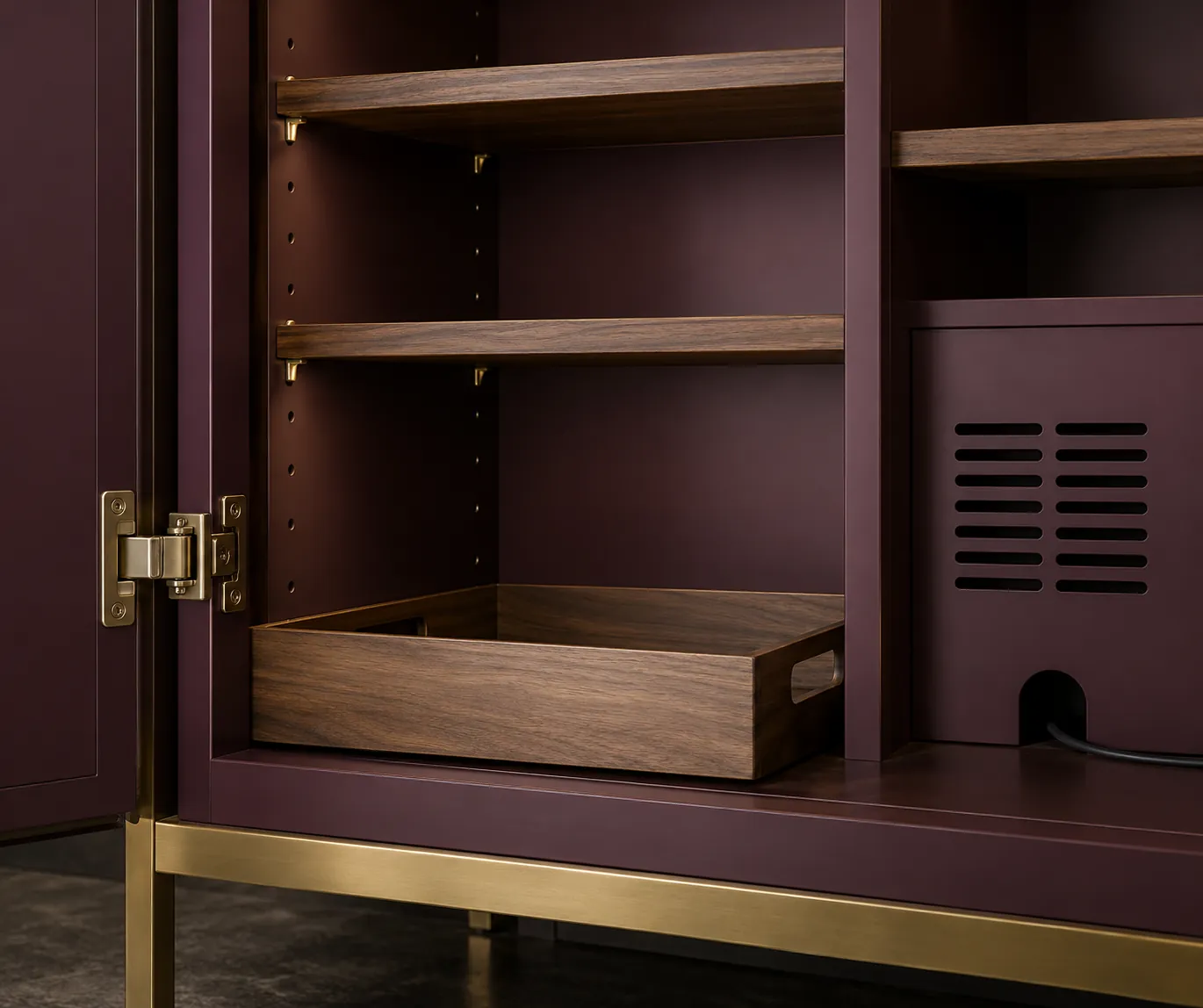
Ask which components are supplied with the cabinet and which require separate work by an appropriate professional. A beautiful elevation is not an electrical scope, however persuasively it glows in the render.
How should doors and hardware be tested?
Doors, drawers and hardware should be tested in their fully open positions with someone standing at the serving surface. Check handles against walls, hinges against adjacent furniture and drawers against chairs or rugs.
For pocket or folding doors, ask how the mechanism is cleaned and serviced. For large doors, review their weight, control and open position. Soft-close hardware can improve daily use, but the exact components and adjustment access should appear in the specification.
Agree locks where needed, particularly if children can access the room. Security and household safety require a project-specific solution, not a generic assumption about a high shelf.
Will the cabinet fit through the delivery route?
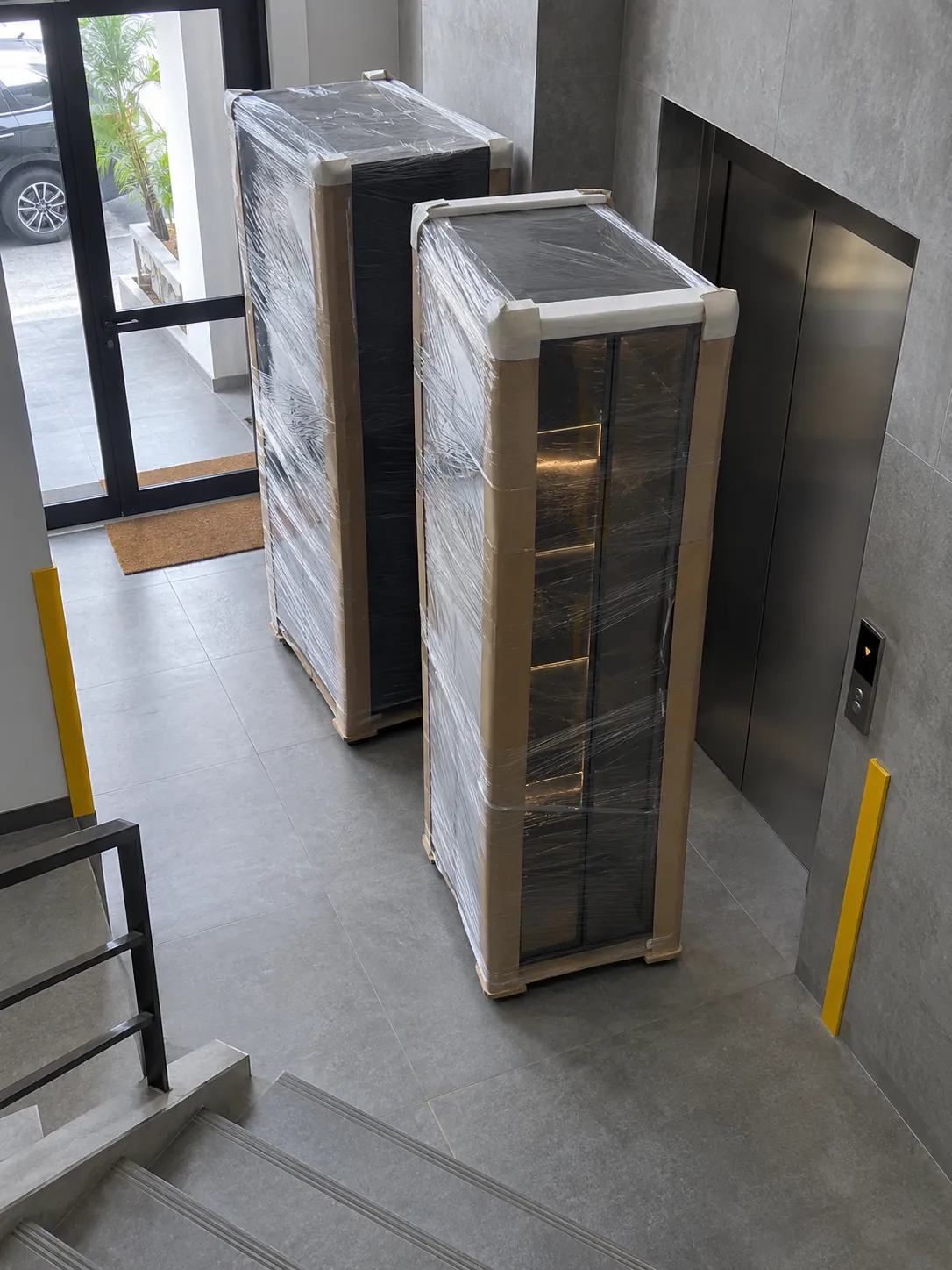
The cabinet must fit through the complete route in its packed or sectional form. Measure the loading area, lift, stairs, corridors, doors, ceiling pinch points and final turn into the room.
Ask for the largest packed dimensions and weight. If the piece separates, identify each module and confirm where final assembly occurs. Check that installers have room to work without damaging walls, floors or nearby furniture.
FCI Nigeria's contact page lists its project enquiry route for premium residential interiors. Send room photographs, the inventory, key dimensions and delivery information rather than only a reference image.
Limitations
This article is a furniture-planning guide, not electrical, refrigeration, alcohol-storage, child-safety or installation advice. Exact load limits, ventilation, fixings, appliance requirements and building rules depend on the selected product and property. Confirm availability, materials and project scope directly.
What is the next sensible step?
Build a one-page brief listing the cabinet contents, serving sequence, open footprint, finishes, services and delivery route. Ask FCI Nigeria to turn it into a dimensioned proposal with the material and hardware schedule agreed before ordering.
Sources
- Luxury Furniture and Interior Design Nigeria, FCI Nigeria. Current furniture, bespoke interior and procurement scope.
- Dining Table Lagos: Measure Before You Buy, FCI Nigeria. Related room, serving and access planning.
- Coffee Table Lagos: Get the Scale Right, FCI Nigeria. Related surface, material and circulation planning.
- Contact FCI Nigeria, FCI Nigeria. Current project enquiry route.
Get in touch
Want to get in touch? We'd love to hear from you. Email us at [email protected]
Sign Up for Newsletter