

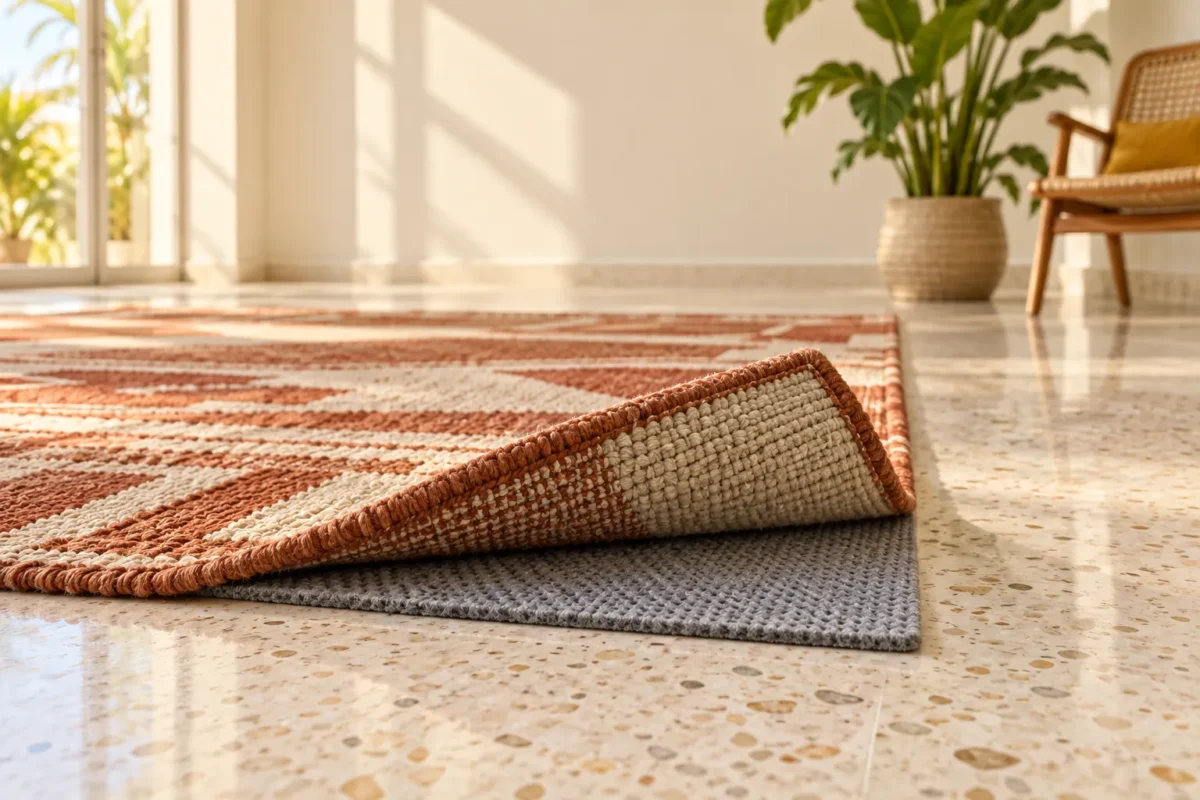
TL;DR: Choose rug underlay by checking compatibility with the exact floor and rug first, then the grip, thickness and care routine the room needs.
Key takeaways
- Rug underlay is the separate layer beneath a rug; its backing must suit the floor it touches.
- Cushioning and grip are different requirements, so a softer pad is not automatically the better choice.
- Some flooring manufacturers restrict particular backings, including latex or rubber on specified vinyl floors.
- Check the combined rug and underlay height at doors and transitions before installation.
- Keep the underlay's material details and care instructions with the rug's handover record.
What does rug underlay actually do?
Rug underlay adds a supporting layer between the rug and floor, with functions that depend on the product's construction. Mohawk Home's rug-pad guide describes cushioning, floor protection and support during use among the intended benefits of its pads.
Do not treat those benefits as a guarantee for any anonymous sheet sold as non-slip. The product still needs to work with the rug, the flooring and the way the room is used. Rug the Rock's guide makes the same distinction between a suitable pad and a universal safety promise.
For a Lagos home, our starting question is not which pad looks thickest. It is who can identify the floor finish and confirm what may remain in contact with it. If the owner, interior designer and property manager hold different pieces of that information, bring them together before fitting the rug.
For the wider layout decision, see our guide to rugs in Lagos and Abuja homes. This article deals with the layer beneath the rug, rather than repeating the colour-and-scale conversation.
Can the same underlay go on every hard floor?
No, a generic hard-floor label is not enough to establish compatibility with every finish. A useful concrete example is Shaw's luxury-vinyl care guidance, which advises mats without latex or rubber backings to reduce possible discolouration.
That is guidance for the flooring covered by Shaw's instructions. It does not establish that every vinyl product has identical requirements, nor that a backing rejected for vinyl is automatically suitable for marble, timber or another floor.
Our recommended approval has two parts. First, obtain the flooring maker's or responsible installer's instructions for the exact surface and finish. Second, ask the underlay supplier to identify its complete construction and confirm the proposed use in writing.
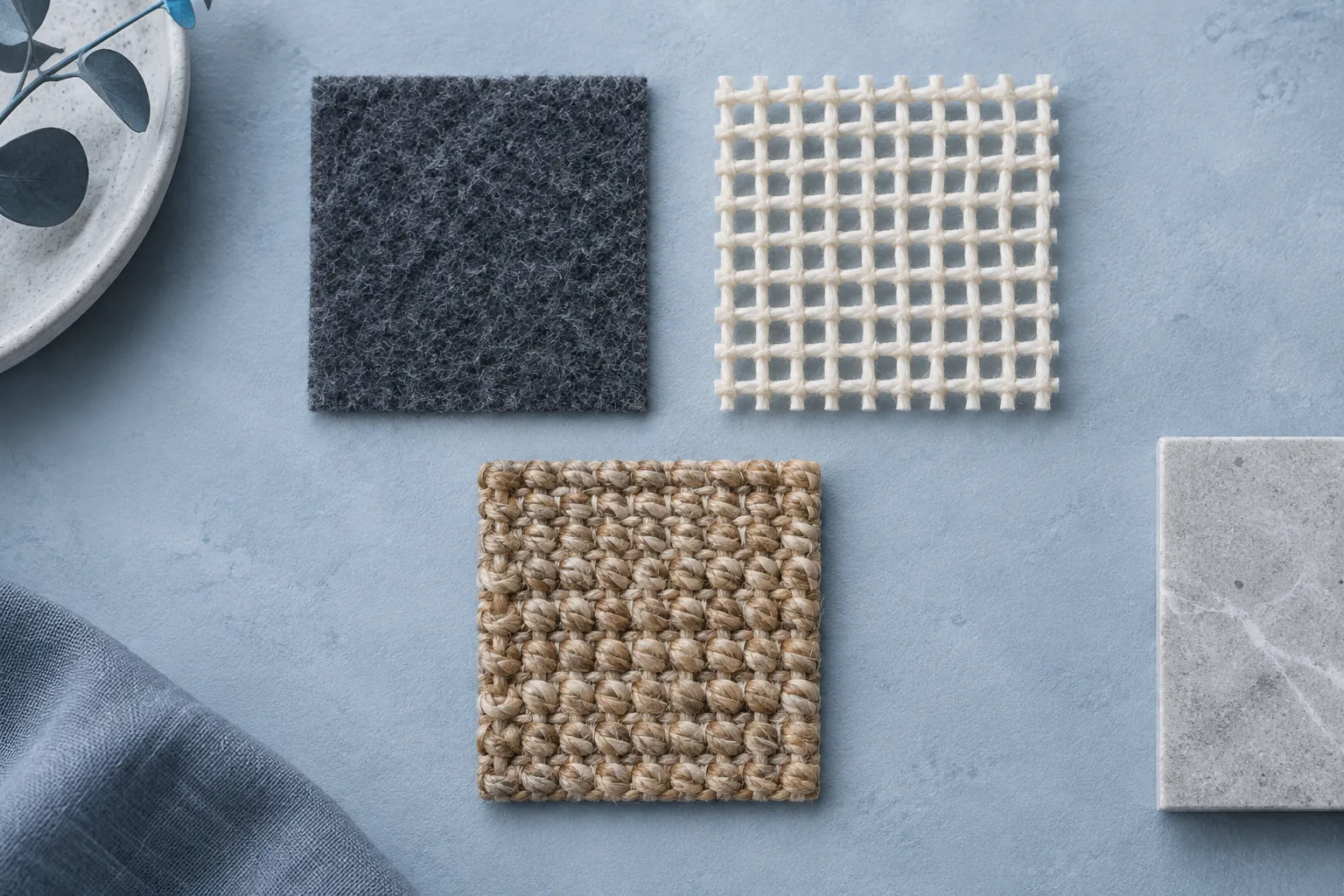
Request more than a colour and a photograph. Rug the Rock notes that similar-looking pads can contain different fibres, polymers, coatings and adhesives. A cream mesh is a visual description, not a material specification.
Should you choose more cushioning or more grip?
Choose according to the problem the rug actually presents, rather than treating thickness as a quality score. Rug the Rock's material comparison distinguishes felt cushioning, gripping backings and layered products that combine functions.
Our suggested shortlist uses three questions:
| Room question | What to ask the supplier |
|---|---|
| Is the rug moving during normal use? | Which approved construction addresses movement on this exact floor? |
| Is the rug comfortable but unstable at its edges? | Can the proposed pad remain flat without adding an awkward raised edge? |
| Is cushioning the main aim? | How will the chosen thickness work with doors, furniture and the rug border? |
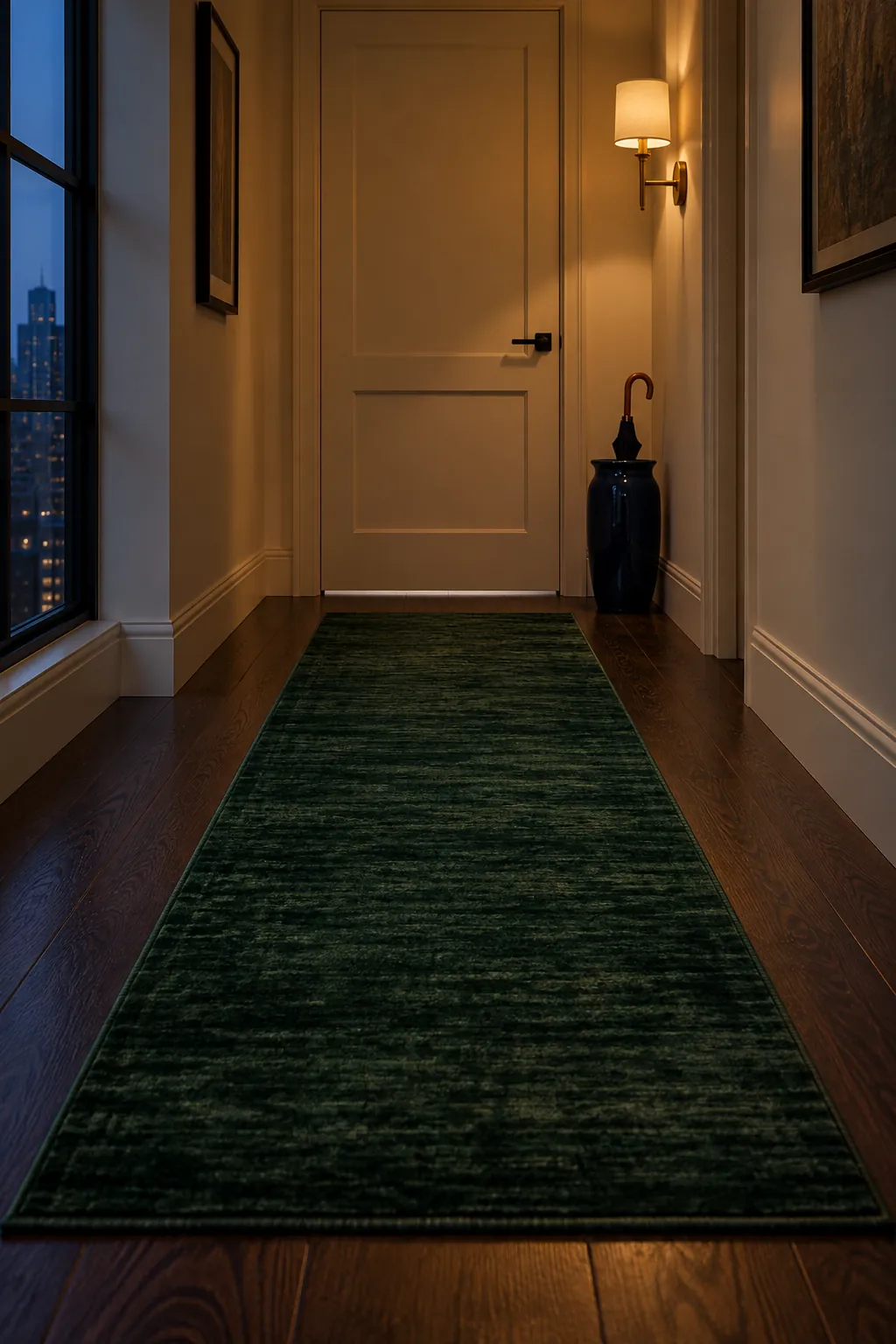
A heavy living-room rug and a narrow entrance runner do not need to be specified by the same rule. For a room with a route between seating and a balcony, our preference is to assess the turning points and exposed edges before adding softness for its own sake.
Avoid asking an underlay to correct a damaged or curling rug. The same rug-pad guide explicitly warns that a pad is not a guarantee against slips or falls and cannot correct a damaged or badly sized rug.
How big should the underlay be?
Use the rug and pad manufacturers' sizing instructions, based on the actual rug rather than its nominal catalogue size. As one product-family example, Mohawk Home advises an inset of one inch on each side so the rug edges taper to the floor.
That is not a universal instruction to trim every valuable rug's underlay in the same way. Ask the rug specialist to confirm the support needed for the particular construction, especially for a fragile or important handmade piece. Do not cut a supplied pad until the specification is agreed.
For a Lagos project, request the final cut dimensions in the same units used on the room plan. Mark which rug they belong to and identify the orientation if the pad has different upper and lower surfaces. This small handover detail is more useful than an unlabelled roll left for someone else to interpret.
Check the total height at each nearby door. Rug the Rock's thickness guidance recommends considering the combined rug and pad, including thick borders, rather than the underlay in isolation.
What should the cleaner or property manager know?
The person lifting and replacing the rug needs the same care information as the person who ordered it. This is our practical priority for a home where the owner, installer and cleaning team may be different people.
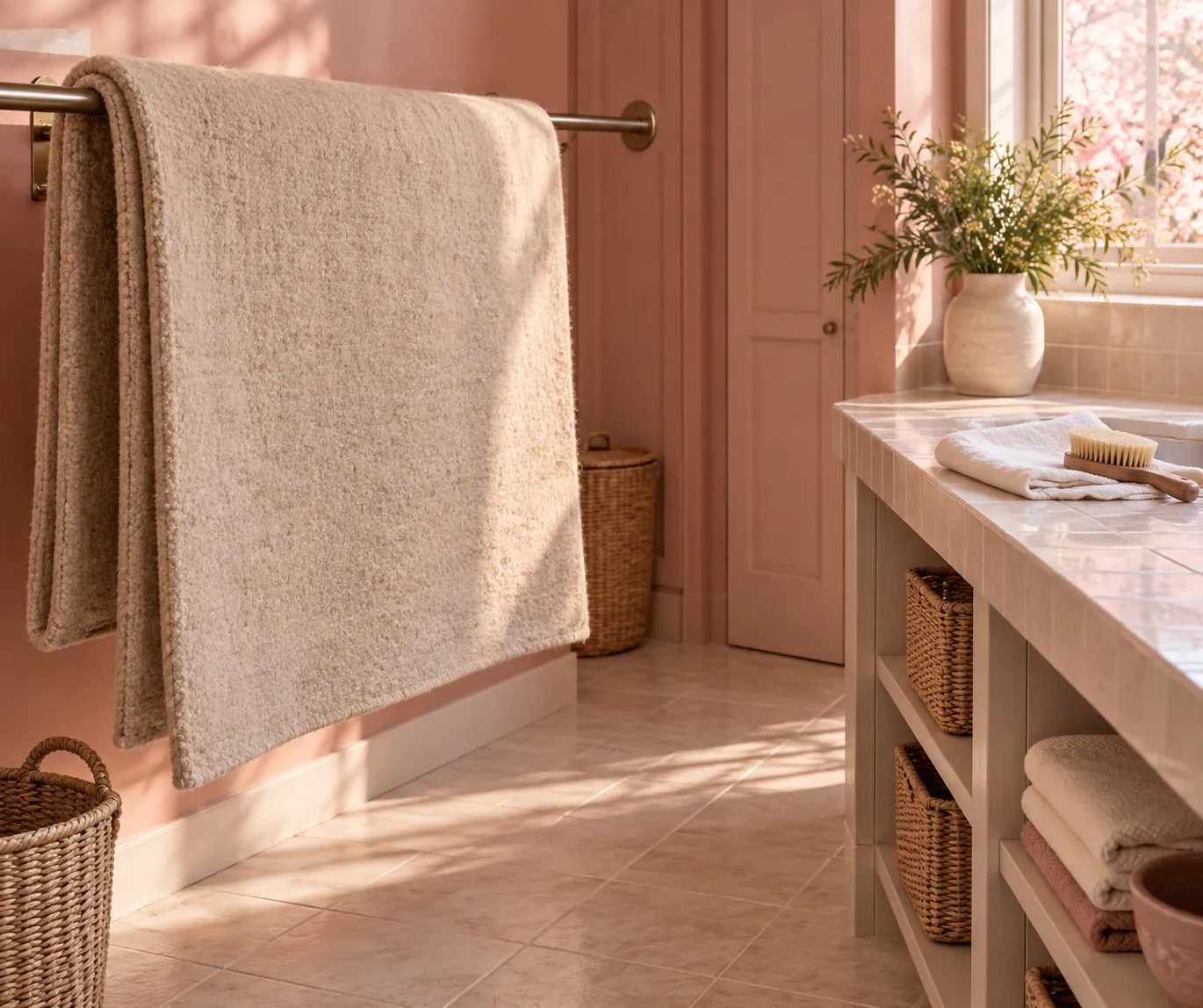
Write down whether the pad may be washed, which side faces down, how to inspect beneath it and who to contact if there is a change. Rug the Rock's care guidance says not to wash a pad unless its instructions permit it and to ensure it is fully dry before returning it beneath the rug.
If the floor is wet-cleaned, agree a routine that leaves the relevant surfaces dry before reinstallation. Do not assume the visible rug surface tells you what is happening underneath. The same guide recommends inspecting for trapped moisture, residue, tackiness, colour transfer and changes to the floor.
Do not solve unexplained movement by adding adhesive tape without approval. The installation guidance says tape should be used only when both the flooring and tape manufacturers approve the combination.
What belongs in a proper rug handover?
A useful handover connects the rug, underlay, floor and care responsibilities in one record. We recommend keeping the product names, backing composition, compatibility confirmation, cut size, care instructions and supplier contact together.
After fitting, check the ordinary routes, doors and edges with the room furnished. Record any unresolved issue before treating installation as complete. If the rug creeps, the pad crumbles or the floor shows a change, stop using the suspect combination and seek product-specific advice, consistent with Rug the Rock's inspection guidance.
If the rug is part of a larger scheme, explore FCI Nigeria's furniture sourcing service with the floor information included in the brief. The current page describes furniture sourcing and full-room schemes, not a promise that a particular underlay is stocked or approved for your floor.
Limitations
This is a specification framework, not a test of any underlay or a slip-resistance guarantee. Manufacturer advice is product-specific, and the commercial rug guide is not an independent laboratory study. No universal backing, cleaning method or replacement interval is recommended.
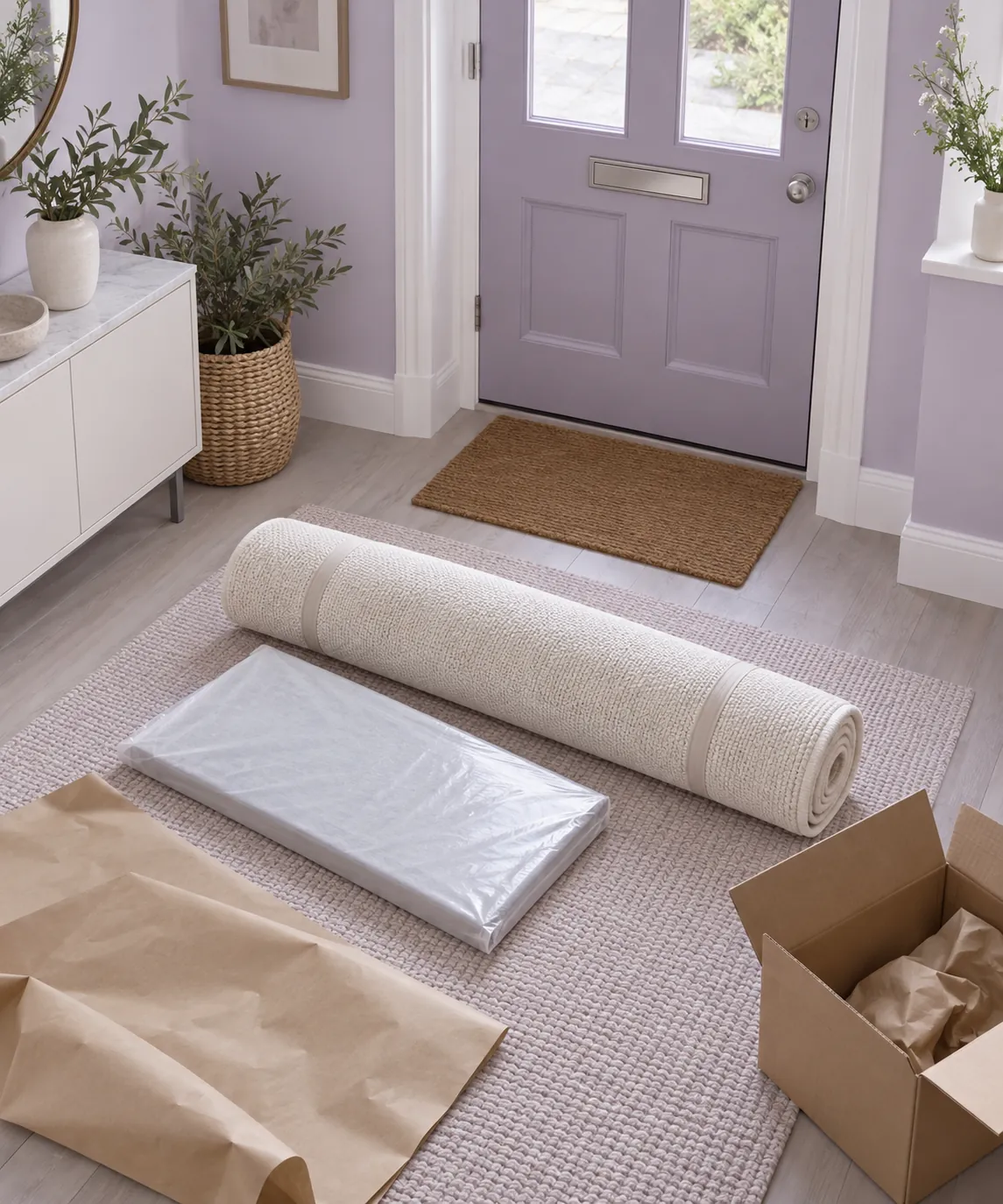
Generated images are illustrations, not FCI stock photographs, real installations or evidence of material compatibility.
What is the next step for your Lagos room?
Gather the rug details, floor specification and a photograph of the intended position, then contact FCI Nigeria to discuss the room brief. Ask what can be specified and which compatibility questions need confirmation from the flooring or underlay supplier.
The underlay may be invisible once the room is finished. Its specification should not be.
Sources
- Why Buy an Area Rug Pad, Mohawk Home. Manufacturer guidance on pad functions and its sizing approach.
- Vinyl Floor Care & Maintenance, Shaw Floors. Manufacturer guidance, including backing restrictions for the covered vinyl floors.
- How to Choose a Rug Pad: Floor Safety, Size and Materials, Rug the Rock. Commercial guidance on compatibility, thickness, installation and care; page dated 8 November 2022.
- Luxury Rugs for Lagos and Abuja Homes, FCI Nigeria. Related room-planning reading, not material-performance evidence.
- Luxury Furniture in Nigeria, FCI Nigeria. Current sourcing and full-room service scope.
- Contact FCI Nigeria. Current enquiry route.
Get in touch
Want to get in touch? We'd love to hear from you. Email us at [email protected]
Sign Up for Newsletter