

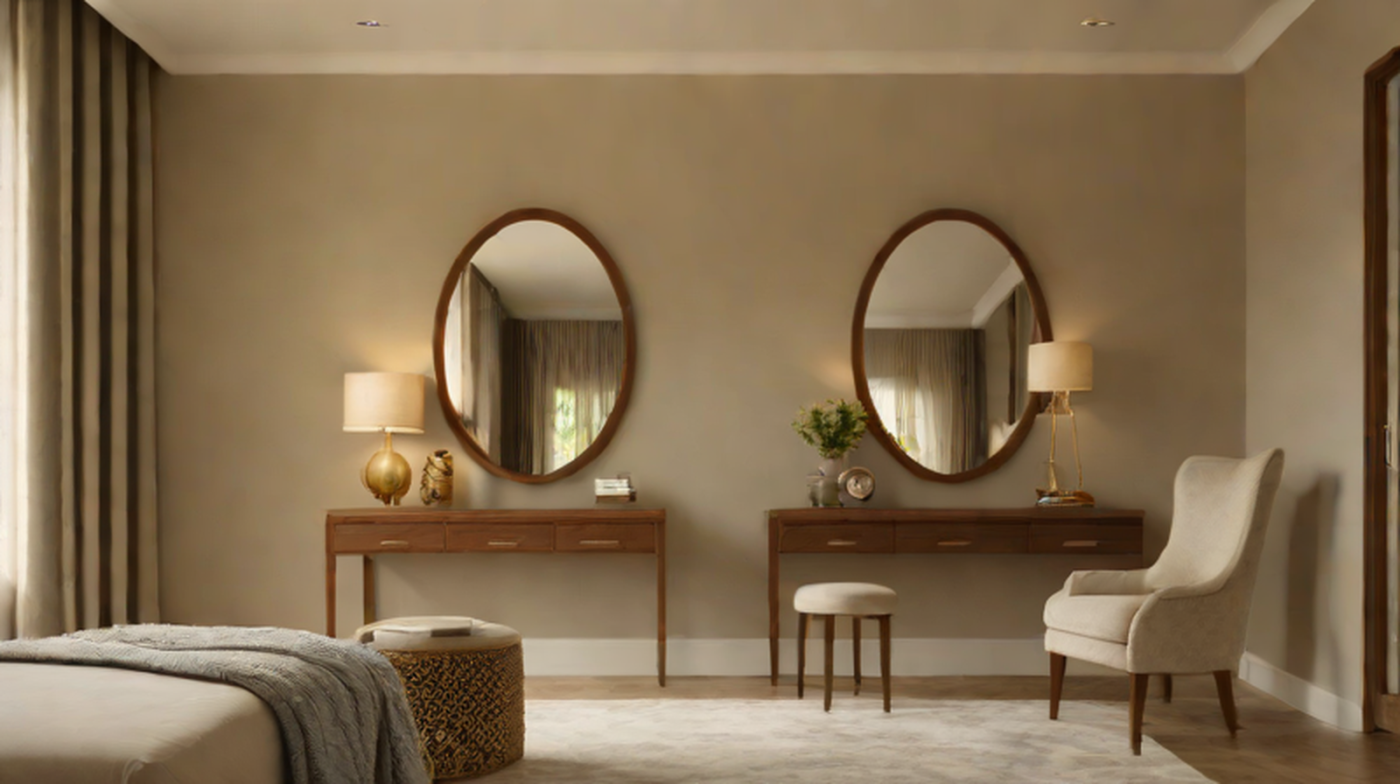
A dressing table is not just a decorative desk that happens to meet a mirror.
In a well planned Lagos or Abuja bedroom, it becomes part of the morning routine, the evening routine and the overall calm of the suite. It needs the right light, enough storage, a comfortable seat, a sensible mirror and a finish that belongs with the bed, wardrobes, curtains and floor.
Get it wrong and it becomes a clutter station with a glamorous name. Get it right and the bedroom feels more complete, more useful and more personal.
Start with the room layout
The dressing table should be planned as part of the bedroom, not squeezed into whichever wall is left after the bed has taken command.
Good positions include:
- Near the wardrobe or dressing area, so clothes, accessories and grooming items sit in one practical zone.
- Beside natural light, if glare and privacy can be controlled.
- Along a quiet wall where the chair can pull out without blocking movement.
- Within a principal suite where it supports the dressing room rather than competing with it.
The important test is simple. Can someone use the dressing table without blocking a wardrobe door, fighting a curtain stack or turning the bedroom into an obstacle course?
Mirror choice changes the whole piece
The mirror is usually the strongest visual element.
A large wall mirror can make the dressing table feel architectural. A framed mirror can add softness or formality. A round mirror may suit a calmer contemporary bedroom. A triptych mirror can work where detailed grooming matters, but it needs enough space and the right styling so it does not feel heavy.
Mirror height matters too. It should work when seated and still sit comfortably within the wall composition. If it is too high, it feels disconnected. If it is too low, it makes the whole setup feel cramped.
Lighting should flatter without shouting
Dressing table lighting needs more thought than one ceiling light and crossed fingers.
Natural light is useful, but it changes throughout the day. Wall lights, table lamps, mirror lighting or soft integrated lighting can help create a more reliable setup. The aim is even, gentle light, not a dramatic spotlight that makes every morning feel like an interrogation.
In Lagos and Abuja homes, curtains, blinds and glazing can affect the light heavily. Plan the dressing table with the window treatment, mirror and artificial lighting together.
Storage should hide the small things
Dressing tables collect objects quickly.
Perfume, skincare, jewellery, watches, hair tools, chargers, brushes and cosmetics all need a place. Without storage, the surface becomes busy within days. A beautiful table can lose its effect under everyday clutter, because real life keeps arriving.
Useful storage choices include:
- Slim drawers for daily items.
- Deeper drawers for hair tools and larger products.
- Divided inserts for jewellery and watches.
- Concealed sockets or cable routes where suitable.
- A nearby cabinet or wardrobe section for overflow storage.
Luxury does not mean pretending nobody owns a hairdryer.
Choose the seat carefully
The stool, chair or bench matters as much as the table.
It needs to be comfortable enough for daily use, low enough to tuck away neatly and finished in a material that belongs with the bedroom. A bulky chair can block movement. A stool with no comfort can make the space decorative but unpleasant. A small upholstered seat often works well because it adds softness without taking over.
The seat is also a chance to connect textures: fabric, leather, timber, metal or a detail picked up from the bed or curtains.
Materials should match the suite, not just the table
A dressing table has to belong to the room.
Walnut, oak, lacquer, marble tops, brushed metal, glass, leather and stone details can all work when they relate to the wider bedroom. The finish should connect with the bed frame, bedside tables, wardrobes, rug, curtains and lighting.
Matching every piece exactly can look flat. Mixing finishes with discipline often feels richer. A walnut dressing table can sit beautifully with a softer upholstered bed. A lacquered piece can calm a darker room. A marble top can add polish, but only if it does not fight the rest of the materials.
Dressing rooms need a different approach
In a walk in wardrobe or dressing room, the dressing table may need to be more functional and more integrated.
It can sit between wardrobe runs, opposite a mirror wall or within a central island layout. Storage can be coordinated with jewellery trays, accessory drawers, handbag shelves and lighting. The table can feel built in, freestanding or somewhere between the two.
The key is sequence. A good dressing area lets someone move from wardrobe to mirror to grooming to final check without the room feeling overfilled.
Guest rooms and daughters' rooms deserve planning too
Dressing tables are not only for the principal suite.
A guest bedroom may need a compact dressing table that doubles as a writing surface. A daughter's bedroom may need storage that can evolve over time. A smaller apartment bedroom may need a slim piece that works with a wardrobe and mirror without taking over the wall.
The best option depends on the room's real use, not a catalogue photograph.
How FCI Nigeria can help
FCI Nigeria works with homeowners planning complete interiors, where furniture choices are considered as part of the whole room.
That matters for dressing tables because the piece sits at the junction of storage, lighting, mirrors, seating, wardrobe flow and personal routine. A strong dressing table can make a Lagos principal suite feel calmer, an Abuja bedroom feel more polished and a dressing room feel properly finished.
It is a small daily-use zone with a big visual role. Treat it properly.
Related reading
- Bedroom suite planning
- Wardrobe and dressing room flow
- Mirror scale and bedroom balance
- Dressing table lighting
- Privacy and natural light control
Book a consultation with FCI Nigeria to plan a complete bedroom scheme.
Get in touch
Want to get in touch? We'd love to hear from you. Email us at [email protected]
Sign Up for Newsletter