

Lighting is the most underestimated design tool in a luxury home. It can make a large room feel intimate, a bold furniture piece feel balanced and a neutral scheme feel layered. It is also the fastest way to waste an expensive interior by relying on a single ceiling point and hoping for the best.
In Lagos and Abuja homes, where scale, hosting and daylight all shape the room, lighting needs proper planning. More than one source. More than one height. More than one mood.
The simple answer
Luxury lighting for a Lagos or Abuja home should be planned in layers: ambient light for the whole room, task light for specific activity and accent light for architecture, art and furniture. Chandeliers, pendants, wall lights, floor lamps and table lamps should work together, not fight for attention.
Start with the room, not the fitting
The most common lighting mistake is choosing a chandelier because it looks dramatic in a showroom, then finding it overwhelms the room or sits at the wrong height. Lighting should be chosen for the actual space.
Before selecting any fitting, check:
- What is the ceiling height?
- How large is the room in square metres?
- Where does natural daylight enter and at what time of day?
- What furniture will sit in the room and where?
- Will the room be used for hosting, relaxing, working or all three?
- Are there architectural features worth highlighting?
A polished Lagos living room or Abuja entertaining space needs lighting that adapts. The same room might need bright, even light during a daytime gathering and softer, warmer light in the evening.
Layer the light
Good lighting uses at least three layers.
Ambient light is the base: chandeliers, ceiling pendants, recessed spots or cove lighting that fill the room with a comfortable general level. Task light serves specific activities: reading lamps, kitchen island pendants, desk lights, bathroom mirror lights. Accent light draws attention: wall lights near art, uplighters near textured walls, spotlights on sculpture or joinery.
If a room has only one ceiling point and nothing else, the design is not finished. The furniture, finishes and colour scheme will look flat no matter how much was spent on them.
Choose chandeliers for scale, not spectacle
A chandelier should feel like it belongs to the room, not like it arrived from a bigger house and refused to leave.
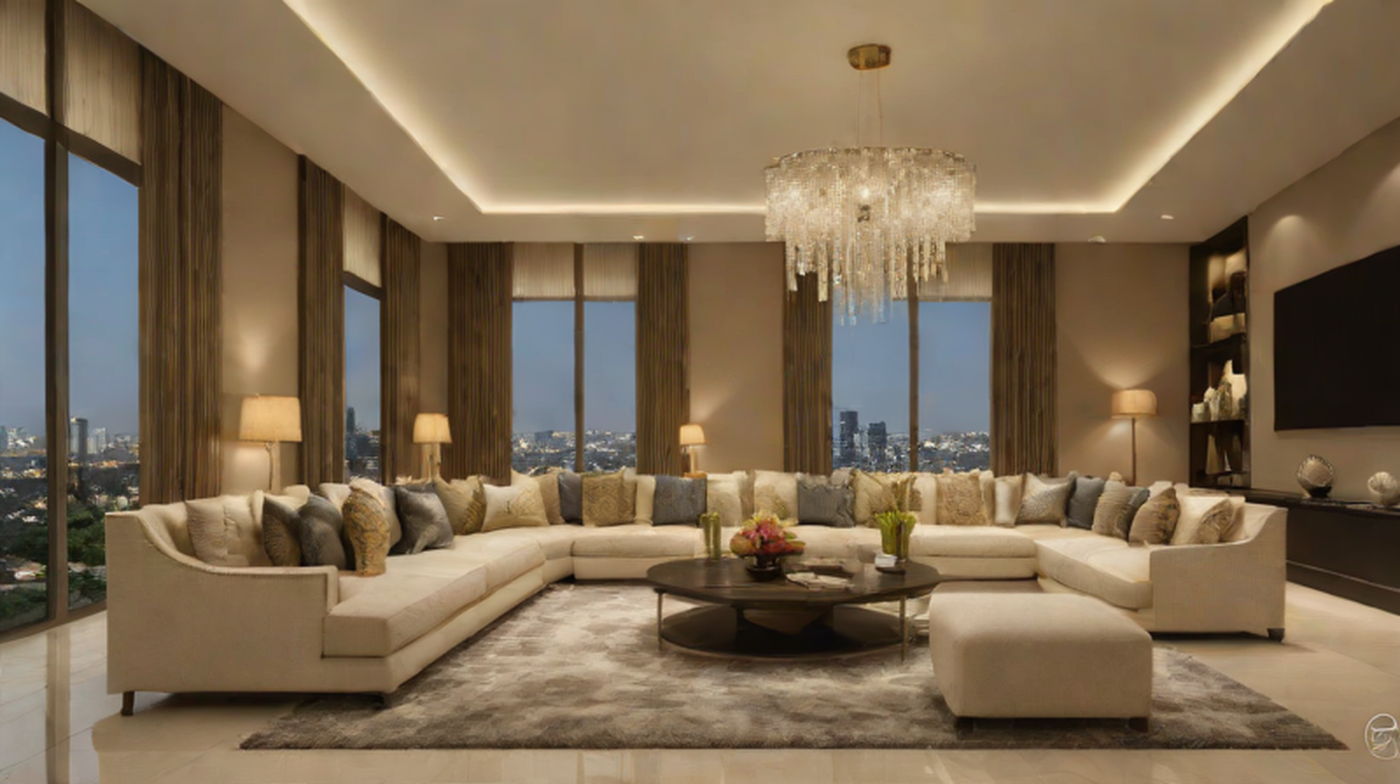
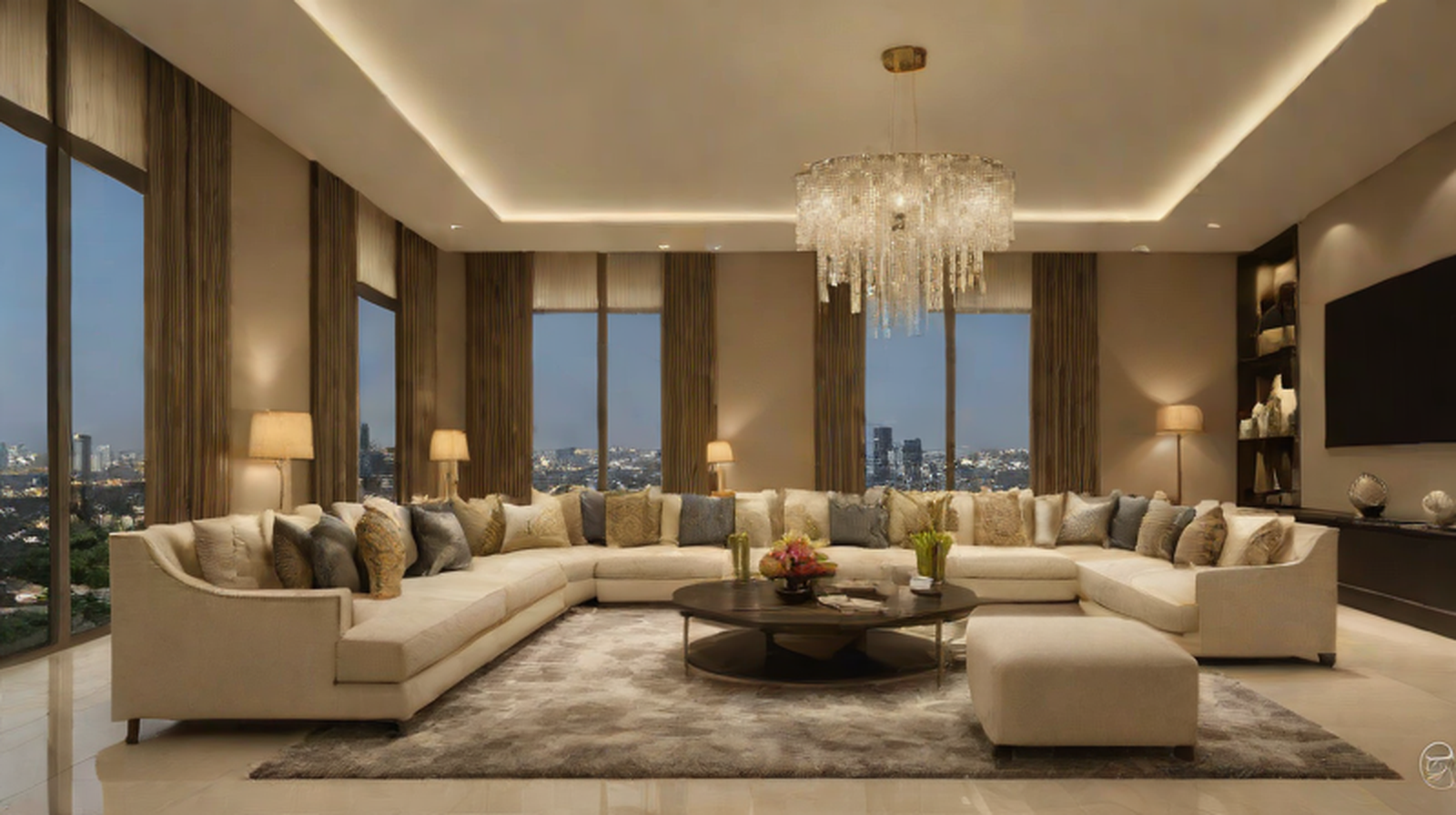
For a large Lagos living room or Abuja double height entrance, a substantial chandelier can anchor the space and give the ceiling the attention it deserves. For a dining room, the chandelier should centre over the table and stay in proportion to the table length and width. For a bedroom, a softer, more delicate chandelier or pendant can add polish without overpowering the calm.
The bottom of a chandelier should clear the tallest person in the room with room to spare. In a living room, aim for roughly 2.1 metres above the floor at minimum. Over a dining table, around 75 to 90 centimetres above the surface keeps the light connected to the table without blocking sightlines.
Use wall lights to shape the room
Wall lights are often treated as an afterthought. They should be part of the early plan.
In a living room, wall lights can frame a sofa, highlight a sideboard, soften a TV wall or add warmth to a reading corner. In a hallway or entrance, they can create rhythm along a corridor and make the space feel designed rather than simply painted. In a bedroom, wall lights beside the bed free up the bedside table and create a cleaner look.
Placement matters. Wall lights that are too high can make a room feel as if it is waiting for a hotel guest. Too low and they risk glare or awkward shadows. The height should relate to eye level, furniture scale and the specific function.
Match pendants to islands, tables and counters
Pendant lights are practical and decorative in equal measure. Over a kitchen island, a row of pendants can define the workspace and add vertical presence. Over a dining table, a single pendant or cluster can create intimacy. Over a bathroom vanity or dressing table, pendants can provide task light with more personality than a standard ceiling point.
Scale the pendant to the surface. A tiny pendant over a six metre dining table will look lost. A large cluster over a small breakfast bar will feel aggressive. The light should feel balanced, not like a design dare.
Plan for dimming and mood
Every layered lighting scheme needs dimming. A room that can shift from bright and alert to warm and calm is worth far more than a room with one switch and one mood.
Dimmers belong on ambient circuits, wall lights and any fitting that needs flexibility. Task lights can benefit from dimming too, especially in bedrooms and living areas.
The goal is control. Lighting should serve the moment, not dictate it.
Connect lighting to furniture and finishes
Lighting changes how materials read. Stone, timber, glass, metal, lacquer, fabric and rug texture all shift under different light temperatures and angles.
A warm timber dining table can look flat under cool overhead light. A stone coffee table can come alive with soft side lighting. A textured rug can look deeper and richer with warm wall lights nearby.
The best interiors pre-plan these relationships. Lighting is not a separate category. It is the final layer that makes every other choice work harder.
Related reading
Final thought
Luxury lighting for Lagos and Abuja homes should not be left to the final shopping list. Planned properly, it gives every room depth, versatility and atmosphere. Planned poorly, it leaves an expensive interior looking like it was designed with the ceiling rose as an afterthought.
FCI Nigeria can help plan lighting as part of a complete home furniture and interiors scheme for Lagos and Abuja homes.
Related reading
- Luxury dining tables for Lagos and Abuja homes
- Luxury sofa buying for Lagos and Abuja homes
- Luxury rugs for Lagos and Abuja interiors
- Luxury curtains and window treatments
- Luxury home bar furniture for Nigerian homes
Planning your lighting? Visit the FCI Nigeria showroom in Lagos to see chandeliers, wall lights and designer lighting in person, or contact us for a private consultation.
Get in touch
Want to get in touch? We'd love to hear from you. Email us at [email protected]
Sign Up for Newsletter