


TL;DR: A modular sofa is a smart Lagos choice when its modules fit the room and delivery route, lock together securely, and can be rearranged without sacrificing comfort.
Key takeaways
- A modular sofa is made from separate seating units that combine into one larger arrangement.
- Measure every individual module, the completed layout and the full delivery route before ordering.
- Secure connectors matter because poorly joined modules can drift apart during normal use.
- Choose the smallest useful configuration first, then add modules only when the room plan proves they fit.
- In Lagos, upholstery care, ventilation and access planning deserve as much attention as colour.
What is a modular sofa?
A modular sofa is a seating system built from independent units that can be connected in more than one configuration. Typical units include armless seats, corner seats, chaise sections, ottomans and end modules with arms.
That definition matters because not every sectional sofa is genuinely flexible. Some products arrive in sections only for transport, but are intended to form one fixed shape. Ask which units can stand alone, where finished side panels appear and whether the connectors can be released without tools.
A useful modular system lets the owner change the room for everyday conversation, a larger gathering or a house move. The commercial advantage is flexibility. The design risk is buying too many pieces and turning that flexibility into clutter.
Is a modular sofa right for a Lagos home?
A modular sofa suits a Lagos home when hosting patterns or future room changes justify the extra flexibility. It is especially useful in open-plan rooms, family lounges and apartments where smaller pieces are easier to deliver than one long sofa.
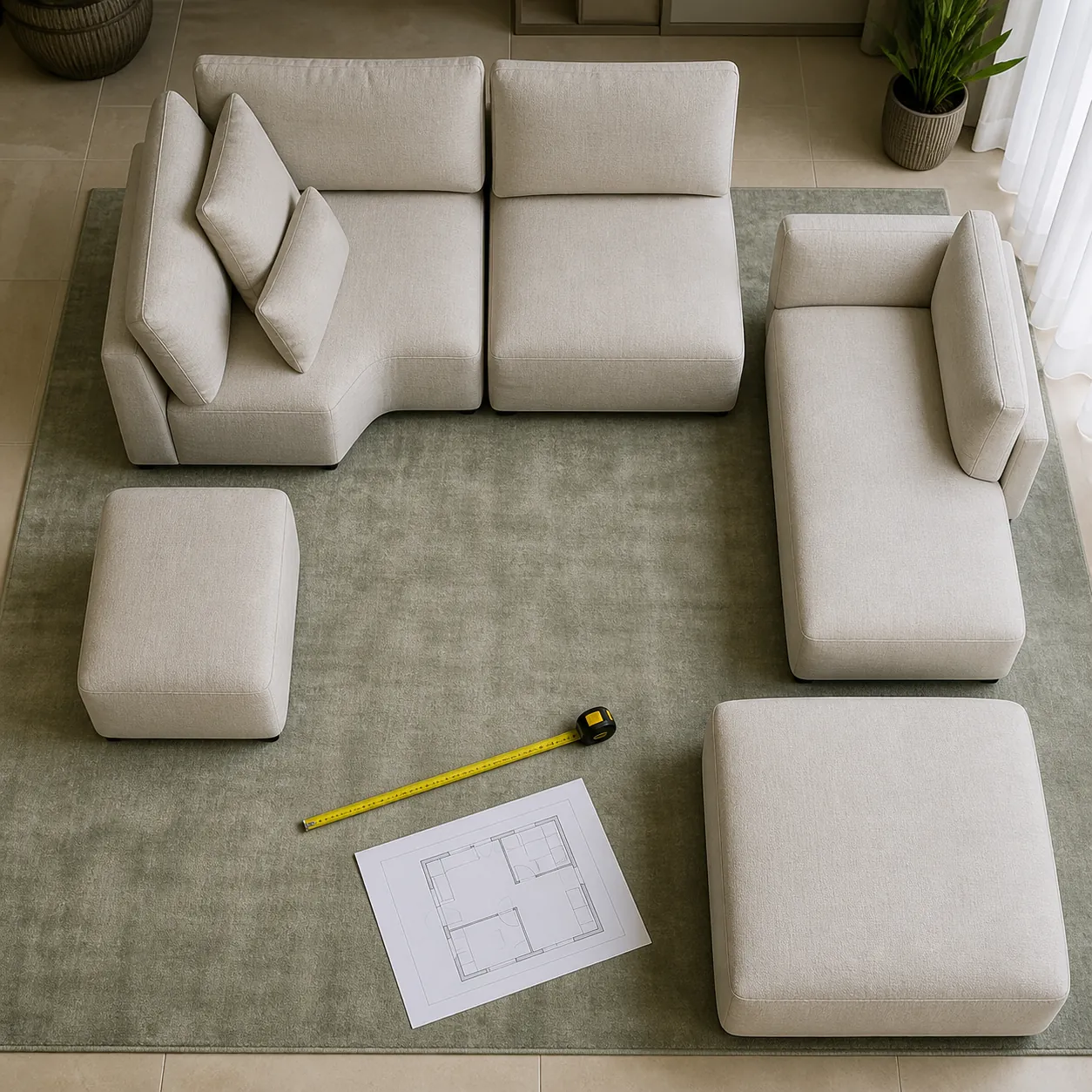
It is not automatically the best choice. A fixed sofa can look calmer, use fewer joins and require less rearranging. A modular sofa also needs a reliable connection system and enough open floor area to make alternative layouts realistic.
Our judgement is simple: buy modular for a real second configuration, not for the label. Sketch the normal arrangement and one alternative that you expect to use. If the second plan blocks a door, air-conditioning path or main walkway, a conventional sofa may be the better purchase.
For broader upholstery context, compare leather and fabric sofas for Lagos before selecting the cover.
How should you measure the room?
Measure the room at floor level, then tape each module in its exact position. Record walls, columns, skirting, curtain stacks, sockets, door swings and any low furniture that affects circulation.
Use this sequence:
- Draw the room with fixed features and openings.
- Mark the overall sofa width and depth.
- Mark every module seam and connector position.
- Add coffee tables, side tables and the television sightline.
- Walk the main routes while the tape remains on the floor.
- Test the alternative configuration in the same way.
Do not rely on a generic three-seat description. Two systems with the same seat count can have very different arm widths, seat depths and corner footprints. Request a dimensioned technical drawing for the exact combination.
If room scale is the main uncertainty, the Lagos sofa material guide provides useful design context, while the taped plan should make the final decision.
Which modules should you buy first?
Start with the modules required for daily seating, not the maximum arrangement shown in a showroom. A practical first set might be a compact L shape with one corner, two seats and one chaise. An ottoman can add occasional seating without permanently lengthening the sofa.
Count regular users, then identify how guests are actually hosted. A large household may value a deep corner arrangement. A formal sitting room may work better with shorter opposing sections. A cinema room may prioritise forward-facing seats rather than conversation.
Ask whether the same range will remain available if you want to add a unit later. Fabrics and dye lots can change, so a future module may not match perfectly. If exact continuity matters, ordering the complete planned set together can reduce that risk.
What construction details matter most?
The frame, suspension, cushions, connectors and finished sides determine whether a modular sofa performs as a coherent piece. Inspect more than the visible upholstery.
Ask the supplier to explain:
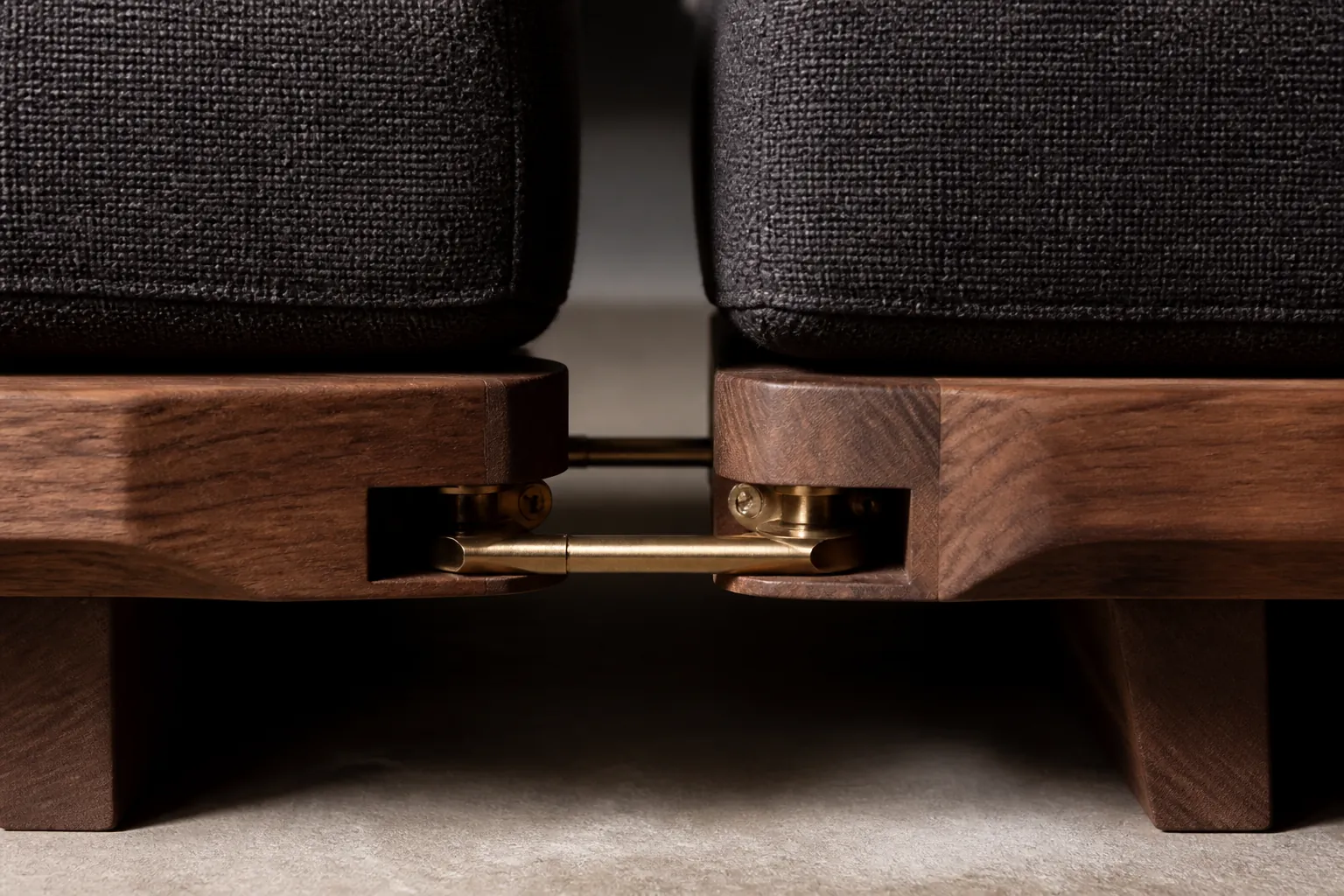
- how adjacent modules lock together;
- whether connectors are replaceable;
- which sides are fully upholstered for standalone use;
- how the frame is reinforced near connection points;
- whether seat cushions are removable or reversible;
- what care instructions apply to the exact fabric;
- whether feet can be replaced without opening the frame.
Sit across a join, not only in the centre of a module. Listen for movement and feel whether seat heights align. Push gently from the side to see whether units separate. Chairish's current modular sofa guide also distinguishes configuration and connection choices, but the specification of the exact product controls your purchase.
Will the sofa fit through the delivery route?
Every loose module must fit through the narrowest opening and around the tightest turn on the delivery route. A smaller module is often easier to move than a conventional sofa, but a deep corner or chaise can still fail at a stair landing or lift lobby.

Measure the packed dimensions, not only the installed dimensions. Confirm whether arms, feet or backs are removable and who is authorised to remove them. Record gate width, lift door, lift cabin, corridor turns, apartment door and the final turn into the room.
The FCI Nigeria pre-order checklist explains why access, responsibilities and installation evidence should be agreed before payment. For remote projects, the guide to furnishing a Lagos home from abroad adds a useful approval trail.
How should you plan for Lagos conditions?
Follow the maker's care instructions and manage the room environment rather than assuming one fabric is Lagos-proof. Direct sun, dust, spills, pets, cleaning products and prolonged dampness affect materials differently.
Request the exact upholstery composition and cleaning code. Check how loose covers, cushion interiors and concealed platform fabric should be maintained. Leave enough clearance for routine cleaning around and beneath the units. Avoid trapping damp items inside an ottoman or between tightly packed modules.
Our Lagos humidity furniture guide explains why material, installation and room conditions should be considered together. No upholstery is maintenance-free.
What should be written into the order?
The order should identify every module, orientation, finish, connector and responsibility without relying on a showroom photograph. Include a plan with product codes and label left-hand or right-hand orientation from an agreed viewing position.
Record the approved fabric, colour reference, feet, cushion option, packed dimensions, delivery route, assembly scope and snagging process. Ask what happens if one module is damaged or delayed. Keep approved samples and drawings with the order record.
Ready to compare configurations? Take a measured floor plan, doorway dimensions and two intended layouts to FCI Nigeria for a focused modular sofa consultation.

What are the limitations of this guide?
This guide cannot verify the fit, durability or care needs of a specific sofa without its technical documents and a site survey. Module dimensions, connector designs and warranties vary by manufacturer. Building access and room conditions also vary.
Use the supplier's signed specification and care instructions as the controlling documents. A measured plan reduces risk, but it does not replace professional access confirmation for a complex delivery.
Get in touch
Want to get in touch? We'd love to hear from you. Email us at [email protected]
Sign Up for Newsletter