

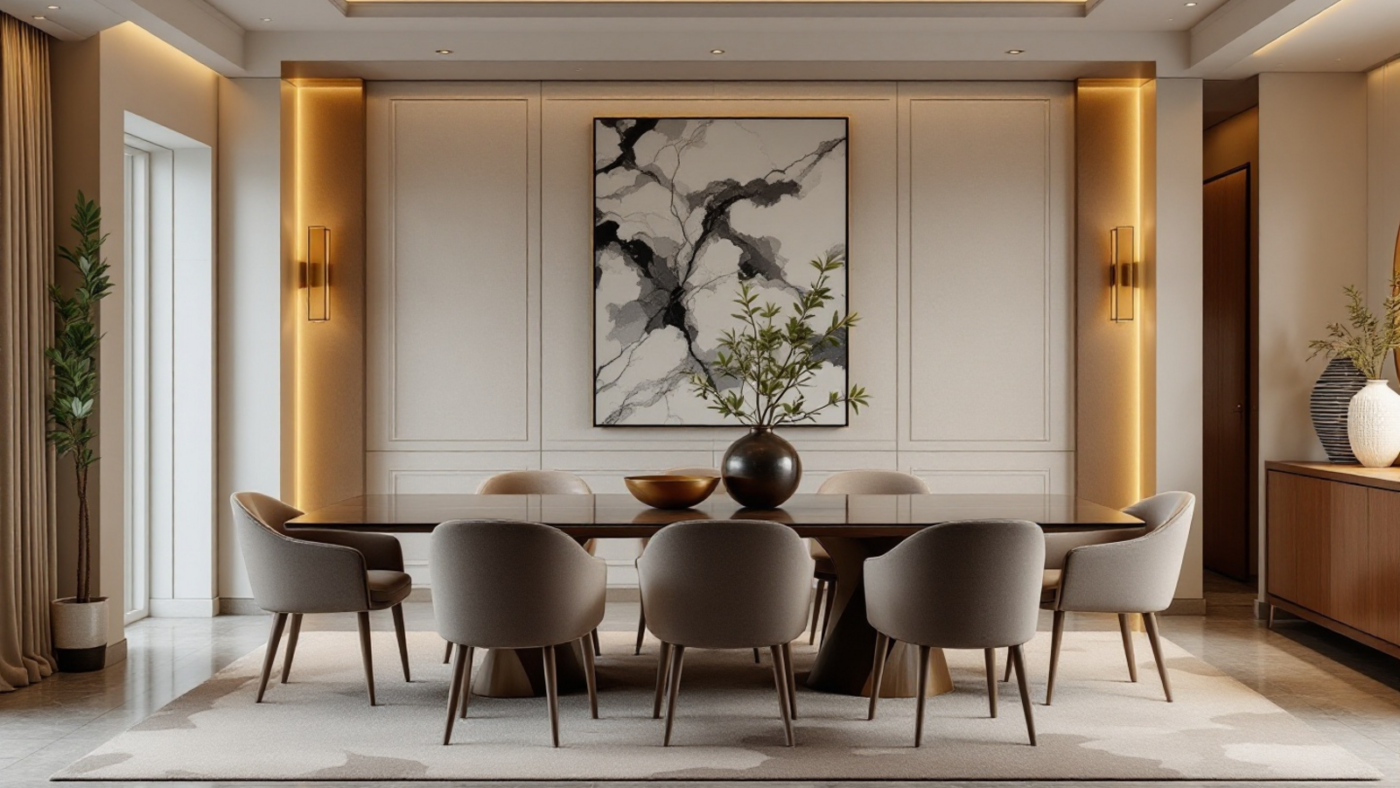
Dining chairs decide how a dining room feels after the first ten minutes. The table may set the visual anchor, but the chairs decide whether guests settle, whether family meals feel relaxed and whether formal hosting works without constant adjustment.
For homes in Ikoyi, Victoria Island, Banana Island, Lekki and Abuja, dining chairs need to do more than look refined. They must suit longer meals, heavier use, air-conditioned interiors, humidity, service routes and the scale of the table. A beautiful chair that is too low, too narrow or too delicate will weaken the whole room.
Start with the table and room size
Choose dining chairs after measuring the table, not before. Chair width, seat height and arm clearance all depend on the table shape and the circulation around it.
Check these measurements before buying:
- Table length and width.
- Table height from floor to underside.
- Space between table edge and wall or sideboard.
- Door swing and service route from the kitchen.
- Rug size if the dining area uses one.
- Number of chairs needed every day and for larger gatherings.
A formal Lagos dining room can look impressive with ten chairs, but it still needs enough space for people to sit down, pull back and be served comfortably. Crowded seating makes even expensive furniture feel poorly planned.
Decide the real hosting pattern
Not every dining room is used in the same way. Some homes use the dining table daily. Some reserve it for family Sundays, guests and celebrations. Some dining areas sit inside an open living space and need to look calm even when not in use.
Plan for the real pattern:
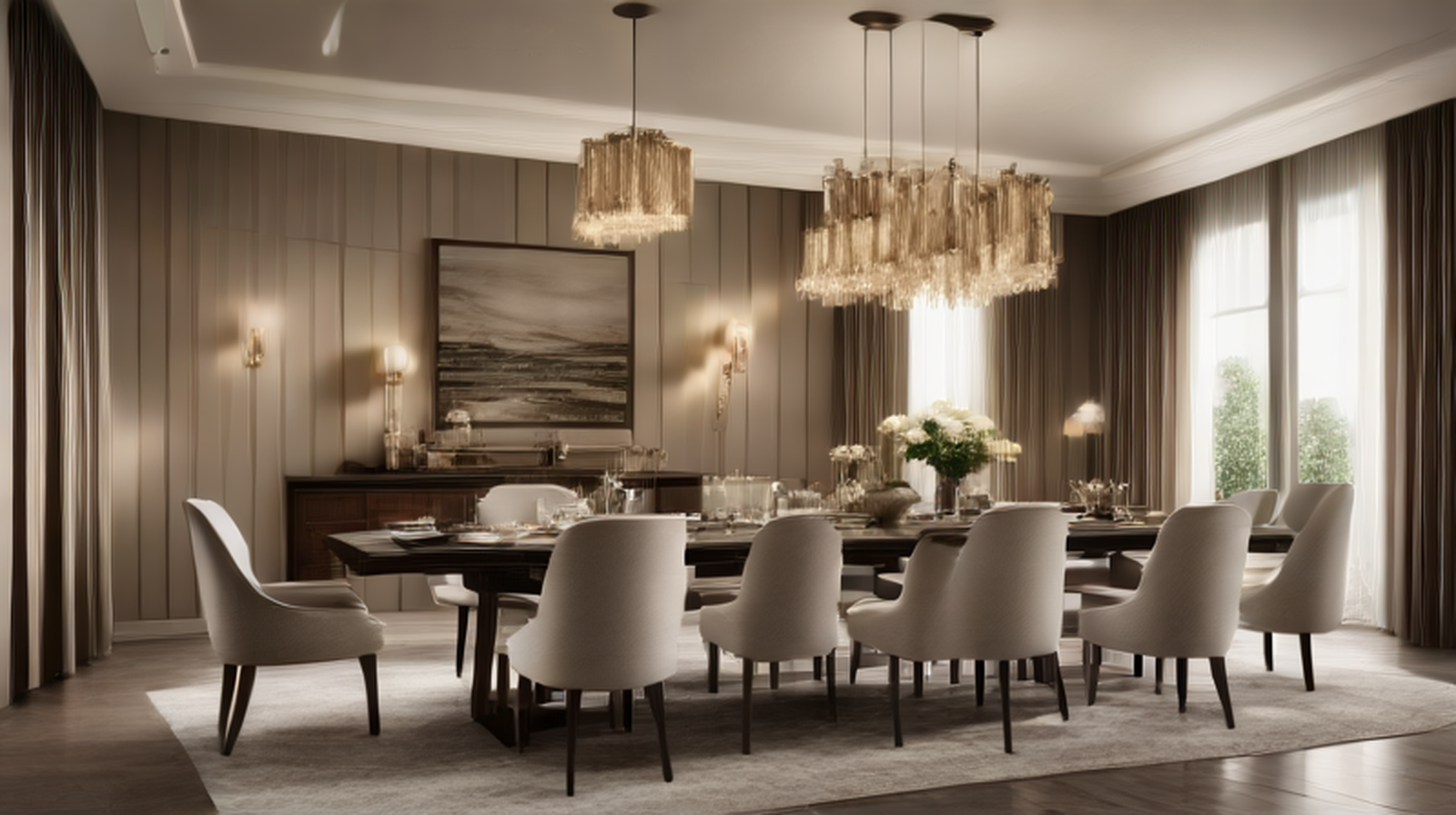
- Daily family dining needs durable fabric, easy movement and comfortable backs.
- Formal hosting can carry more sculptural chairs and stronger materials.
- Open-plan dining needs chairs that look good from the living room.
- A private dining room can handle richer textures and a more dramatic profile.
- Homes with children need finishes that clean well without looking casual.
The right chair is the one that suits the life of the room, not the one that looks strongest in isolation.
Get seat height and comfort right
Comfort is practical, not sentimental. A chair must let people sit naturally with enough thigh clearance under the table, feet stable on the floor and the back supported.
Good dining chair planning includes:
- Seat height that works with the table.
- A back angle that supports conversation, not lounging.
- Upholstery that feels comfortable through a long meal.
- Enough seat width for guests to sit without touching elbows.
- A stable frame that does not wobble on stone or tiled floors.
In high-end Nigerian homes, dinner can turn into an evening. Chairs need to support that rhythm. If a guest starts shifting after fifteen minutes, the design has failed quietly.
Use armchairs carefully
Carver chairs or dining armchairs can make the table feel more complete, especially at the head positions. They also take more space and need careful clearance.
Use armchairs when:

- The table is wide enough to carry them.
- The room has enough space behind the head chairs.
- The arms can fit under or beside the table comfortably.
- The design language matches the side chairs.
Avoid using heavy armchairs on every side unless the room is large. In many Lagos and Abuja homes, a better approach is two stronger end chairs with simpler side chairs. It gives hierarchy without making the table feel stiff.
Choose upholstery for climate and cleaning
Dining chairs in Nigeria need materials that handle air conditioning, humidity, dust and regular cleaning. Fabric choice is not just a colour decision.
Strong options include:
- Performance fabric for family dining.
- Leather where wiping and structure matter.
- Textured weave for visual warmth in formal rooms.
- Timber or metal frames with upholstered seats for a lighter profile.
- Removable seat pads where maintenance is a priority.
Ask how the fabric behaves with spills, dust and sunlight. Pale upholstery can look beautiful, but it needs the right household routine. Darker fabrics hide marks but can make a room feel heavier if the table and floor are already dark.
Match the chair to the wider dining scheme
Dining chairs should connect with the full room: table, rug, lighting, sideboard, curtains, wall finish and art. They do not need to match everything. They do need to belong.
Useful coordination points:
- Chair frame finish with table base or sideboard hardware.
- Upholstery tone with curtains, rug or wall panels.
- Chair silhouette with chandelier or pendant style.
- Seat depth with the table edge and rug boundary.
- Overall height with windows, art and wall features.
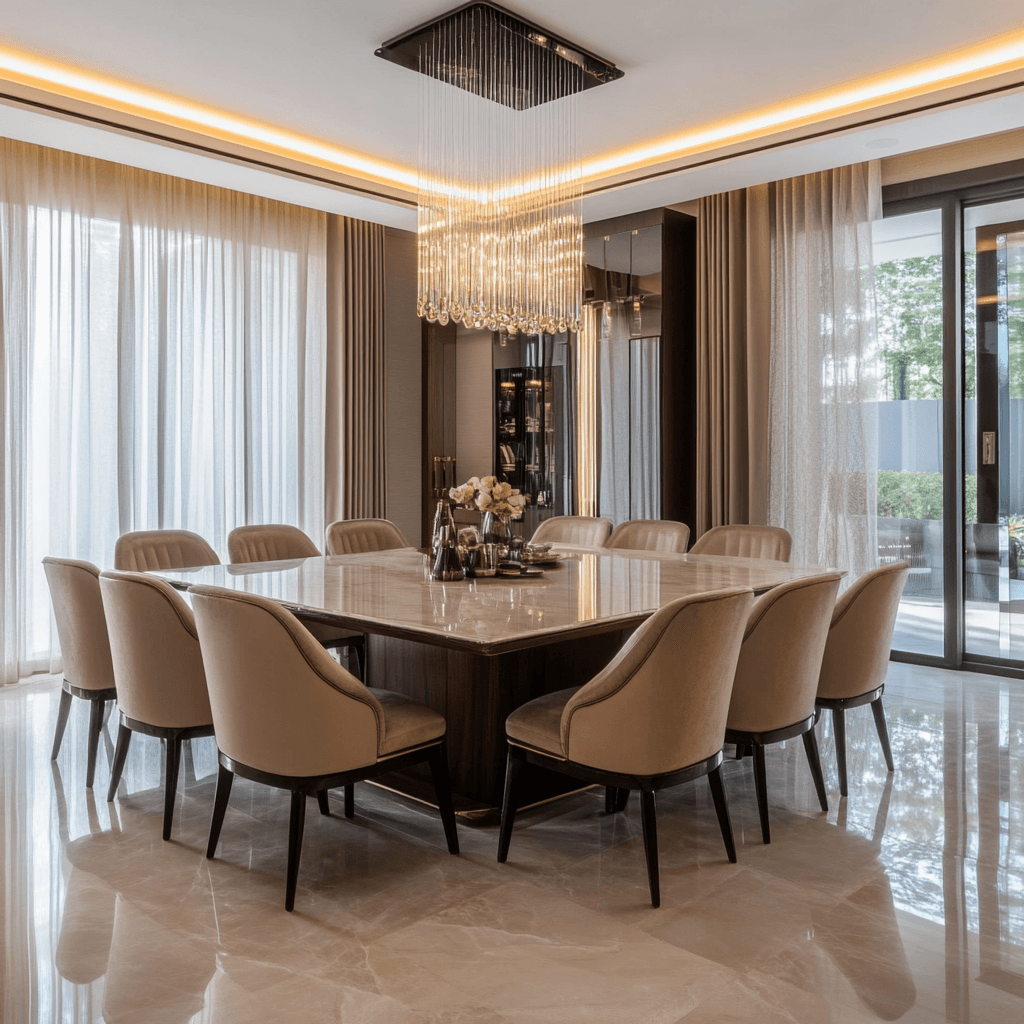
The strongest dining rooms avoid showroom matching. They use repetition, contrast and proportion so each piece feels deliberate.
Plan sideboards and storage at the same time
Dining chairs affect storage because they shape circulation around the table. If a sideboard sits too close, chairs hit the storage doors or block serving. If it sits too far away, the room loses its service function.
A good dining layout allows space for:
- Serving from the kitchen side.
- Guests moving around the table.
- A sideboard opening without moving chairs.
- Drinks, crockery and linens stored close to the room.
- Extra chairs placed neatly when not in use.
For larger homes, occasional spare chairs can be useful, but they should not live awkwardly against the wall. Plan where they go before ordering.
Consider the floor and rug
Many Nigerian homes use marble, stone or large-format tiles in formal areas. Dining chairs need to move without scratching floors or catching on rug edges.
Check:
- Chair glides for stone or tile.
- Rug pile height under chair legs.
- Rug size with chairs fully pulled out.
- Frame stability on polished surfaces.
- Whether the chair weight suits daily use.
A rug can soften the acoustics and define the dining area, but it must be large enough. A chair half on and half off a rug will annoy everyone eventually.
Use lighting to support the chair choice
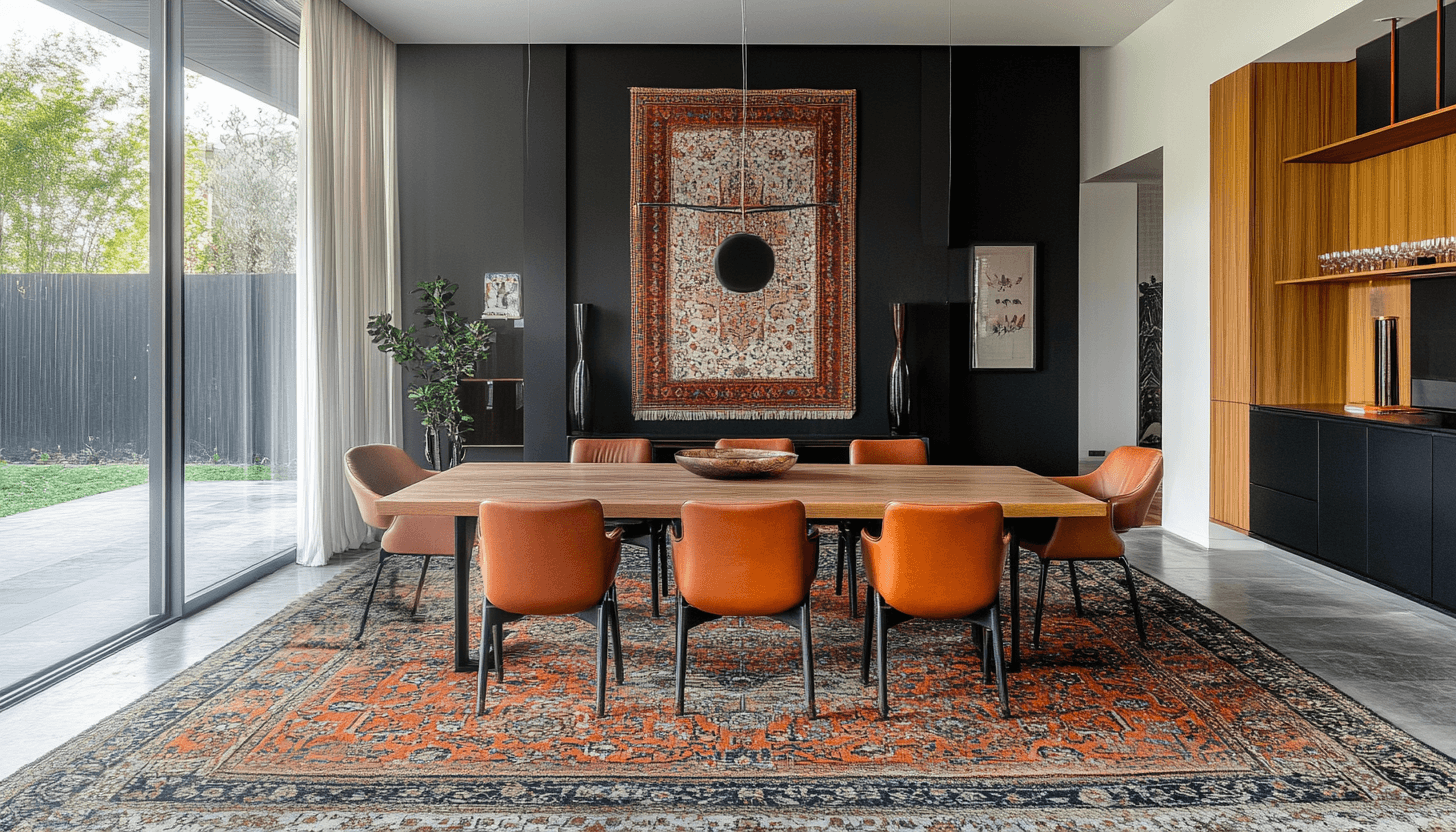
Dining chairs are seen from above, behind and side-on. Lighting changes how upholstery, texture and frame shape read in the room.
If the chairs have sculptural backs, give them enough light to be seen. If the fabric has a strong texture, test it under warm evening light. If the dining room has a chandelier, make sure chair backs do not fight for attention with the ceiling feature.
The aim is balance. Chairs, table and lighting should work together rather than competing for the same visual role.
Make the dining room easier to live with
Luxury dining chairs should reduce friction. Guests should know where to sit. Family should use the room without fear. Staff should serve without squeezing between furniture. Cleaning should be simple enough that the room is not avoided.
Before finalising the order, ask:
- Can the chairs be moved easily by one person?
- Does the upholstery suit the household routine?
- Is there enough space for serving and clearing?
- Are the end chairs too dominant for the table?
- Will the room still look calm with every chair occupied?
A dining room that only works empty is not a dining room. It is a photograph.
Conclusion
Luxury dining chairs for Lagos and Abuja homes should be chosen through comfort, scale, materials and hosting flow. Start with the table and room size, decide how the room is really used, then coordinate upholstery, sideboards, rugs and lighting. FCI Nigeria can help plan dining furniture as part of a complete interior scheme, so the room looks refined and works through a full evening.
Get in touch
Want to get in touch? We'd love to hear from you. Email us at [email protected]
Sign Up for Newsletter