

The Fifth Wall: Why Ceiling Design Matters
In Nigerian luxury homes, the ceiling is often called the “fifth wall” — and for good reason. A well-designed ceiling transforms the perceived volume, light quality, and overall atmosphere of a room. Yet in many high-end projects, the ceiling is treated as an afterthought: a flat expanse of white plaster with a few downlights. This is a missed opportunity.
At FCI Nigeria, we collaborate with architects and interior designers to ensure ceiling design is integral to the interior scheme, working in harmony with the furniture, lighting, and finishes that define a luxury Nigerian home.
Popular Luxury Ceiling Styles in Nigeria
Coffered Ceilings
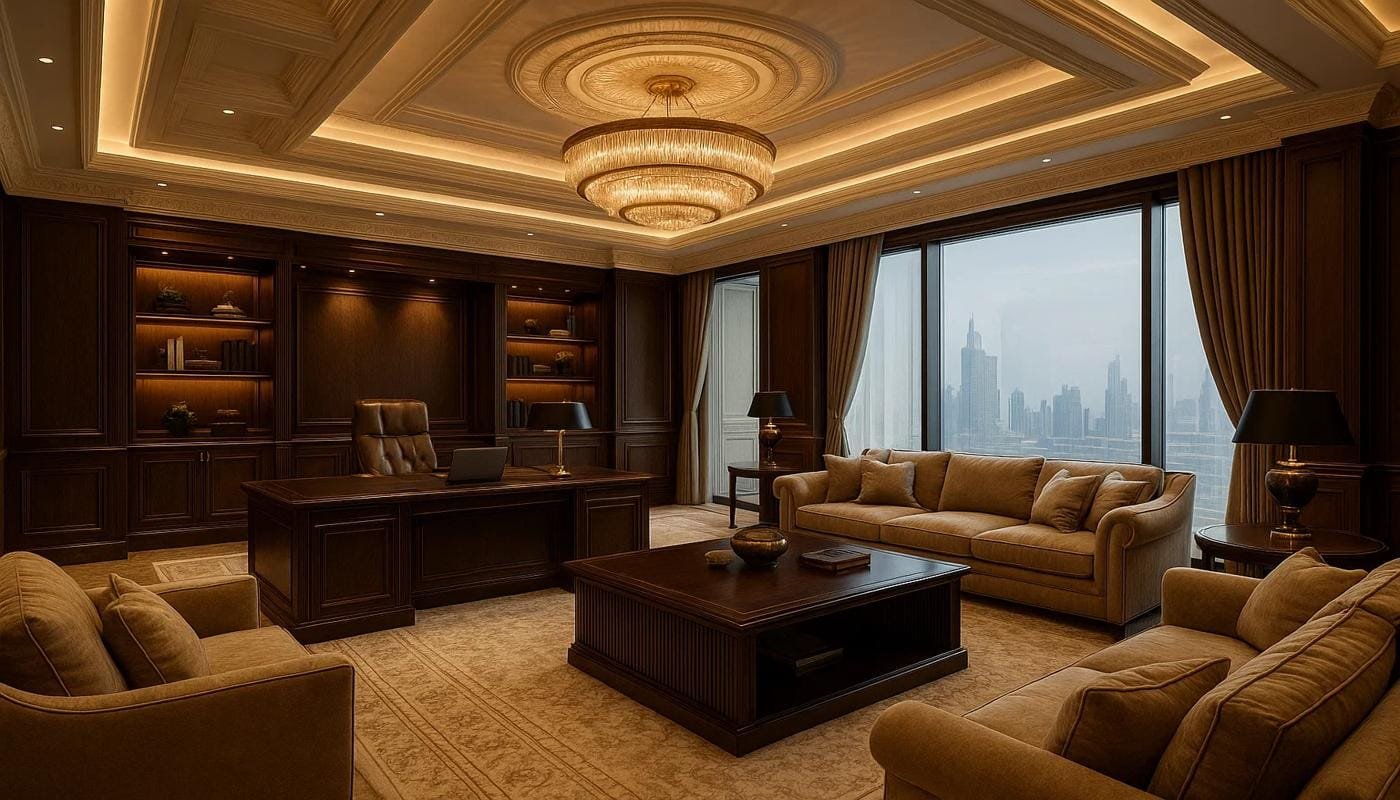
Coffered ceilings feature a grid of recessed panels, creating depth and architectural interest. They are a classic choice for formal living rooms, dining rooms, and entrance halls in Banana Island mansions and Abuja villas. Coffered ceilings can be executed in painted gypsum, timber, or even metal, depending on the design direction. They pair beautifully with traditional and transitional interiors — large dining tables from Cattelan Italia beneath a coffered ceiling create a sense of occasion.
Tray Ceilings
A tray ceiling features a recessed central section, typically 15-30cm higher than the perimeter. This creates a sense of height and provides a natural location for indirect lighting — LED strips concealed in the tray’s edge wash the ceiling with soft, ambient light. Tray ceilings are extremely popular in Ikoyi apartments and Lagos penthouses, where they add perceived height to rooms with standard ceiling dimensions.
Suspended and Floating Ceilings
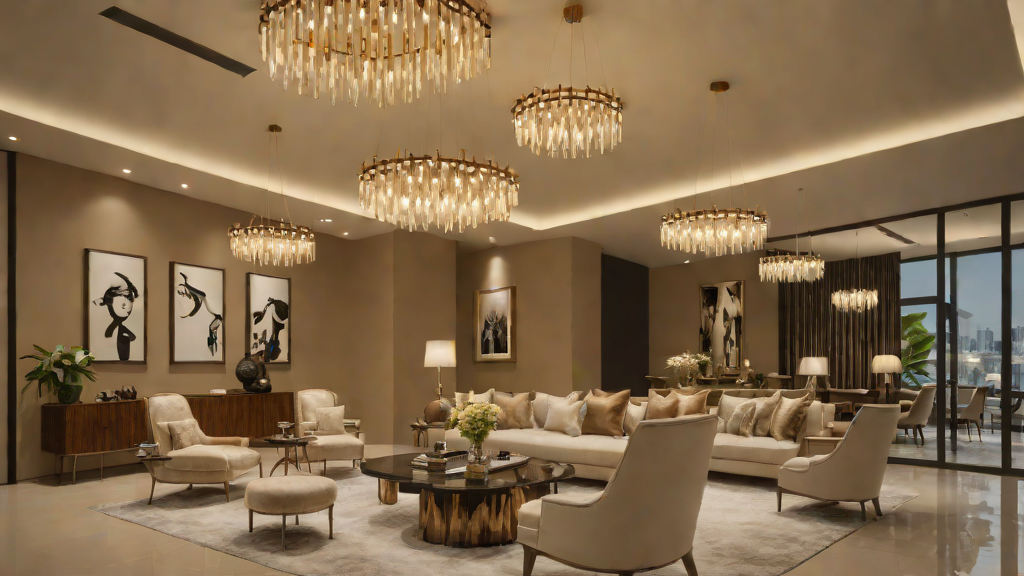
A suspended ceiling panel, separated from the structural ceiling by a visible gap, creates a dramatic floating effect. LED lighting in the gap produces a halo glow that makes the panel appear weightless. This technique works spectacularly in contemporary living rooms and master bedrooms, especially when paired with minimalist furniture from B&B Italia or Minotti.
Barrel and Vaulted Ceilings
For homes with sufficient structural height, barrel-vaulted or arched ceilings introduce a sense of grandeur and classical proportion. They are particularly effective in entrance halls, double-height living rooms, and covered terraces. In Nigerian luxury homes, vaulted ceilings are often finished in polished plaster or clad in timber for warmth.
Backlit Ceilings
Translucent ceiling panels — in onyx, acrylic, or stretched fabric — backlit with LED arrays create a luminous, cloud-like effect. This technique is used in bathrooms, walk-in wardrobes, and dressing rooms where even, shadow-free light is desirable. It is also popular in home spas and wellness rooms.
Timber Ceilings
Timber-clad ceilings add warmth and texture to contemporary interiors. Slatted timber ceilings are particularly on trend — the gaps between slats can conceal lighting, speakers, and air conditioning diffusers while creating visual rhythm. Timber ceilings work beautifully in living rooms, libraries, and covered outdoor areas, complementing natural-material furniture from Flexform and Poltrona Frau.
Integrating Lighting With Ceiling Design
Ceiling design and lighting design are inseparable. The ceiling determines where and how light enters the room:

- Recessed downlights: The workhorses of ceiling lighting. Use adjustable, dimmable LED downlights for general illumination. Space them evenly for uniform light, or cluster them over specific zones (dining table, reading area).
- Cove lighting: LED strips concealed in ceiling recesses, trays, or cornices wash the ceiling with indirect light, creating a warm, ambient glow. This is the single most effective technique for luxury ambiance in Nigerian homes.
- Pendant fixtures: Statement pendants from Flos — over dining tables, in entrance halls, and above kitchen islands — require ceiling reinforcement and pre-wired junction boxes planned during ceiling construction.
- Chandeliers: In formal rooms and double-height spaces, chandeliers remain a powerful design statement. The ceiling must be structurally prepared to support their weight.
- Linear LED profiles: Recessed linear LED channels create clean, architectural lines of light across the ceiling, ideal for contemporary spaces.
Air Conditioning Integration
In Nigeria’s climate, air conditioning is essential, and the ceiling must accommodate AC systems without compromising design:
- Concealed ducted systems: The gold standard for luxury homes. Ductwork is hidden above the ceiling, with linear slot diffusers or custom grilles that blend seamlessly with the ceiling design.
- Cassette units: Ceiling-mounted cassette units are less expensive than ducted systems but more visible. They can be incorporated into coffered or grid ceiling designs where their geometry is absorbed into the pattern.
- Bulkhead integration: Peripheral bulkheads (lowered ceiling sections around the room’s edge) can house both AC ducts and indirect lighting, combining two functions in one design element.
Acoustic Considerations
Large Nigerian living rooms with marble floors, glass walls, and minimal soft furnishing can suffer from echo and poor acoustics. Ceiling treatments can address this:
- Acoustic plaster: Micro-perforated plaster finishes absorb sound while looking identical to standard plaster.
- Fabric-wrapped panels: Decorative acoustic panels integrated into the ceiling design reduce reverberation. They can be covered in any fabric to match the room’s colour scheme.
- Timber slat ceilings: The gaps between slats allow sound to be absorbed by acoustic backing material.
Pair acoustic ceiling treatments with luxury rugs and upholstered furniture from Minotti or Flexform for the best results.
Height Considerations
Ceiling design must respond to the room’s actual height:
- Standard height (2.7-3m): Keep designs simple. Tray ceilings and cove lighting add perceived height. Avoid heavy coffering or deep bulkheads that reduce the sense of space.
- Generous height (3-4m): Most ceiling styles work here. This is the sweet spot for coffered ceilings, statement pendants, and suspended panels.
- Double height (4m+): Scale up the design. Oversized chandeliers, timber-clad vaults, and architectural feature ceilings come into their own.
Budget Guide
Luxury ceiling design costs in Nigeria (per square metre of ceiling area):
- Tray ceiling with cove lighting: NGN 25,000-50,000/sqm
- Coffered ceiling (gypsum): NGN 35,000-70,000/sqm
- Timber-clad ceiling: NGN 50,000-120,000/sqm
- Suspended floating panel: NGN 40,000-80,000/sqm
- Backlit translucent ceiling: NGN 80,000-200,000/sqm
How FCI Nigeria Supports Ceiling Design
While FCI Nigeria is primarily a furniture and interiors company, ceiling design is integral to the rooms we furnish. We work with architects and contractors to ensure that:
- Ceiling designs complement the furniture and lighting we specify
- Lighting positions align with furniture layouts — pendants over tables, reading lights near chairs
- AC integration does not compromise the visual quality of the room
- Acoustic treatments are considered where needed
Contact FCI Nigeria for a holistic approach to your luxury interior, from ceiling to floor.
Get in touch
Want to get in touch? We'd love to hear from you. Email us at [email protected]
Sign Up for Newsletter