

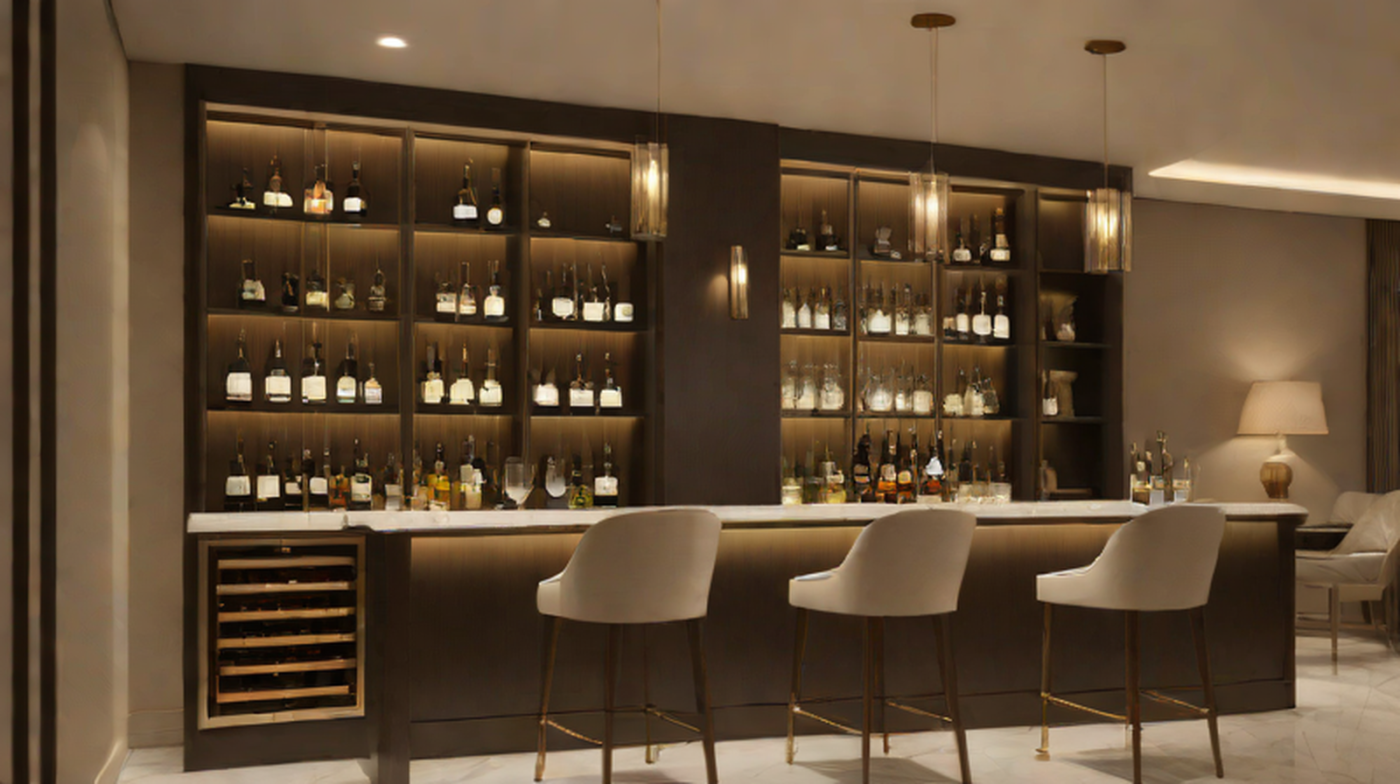
A well-planned home bar does two jobs. It gives guests a natural place to gather before dinner moves to the table. And it tells the room that entertaining was thought through, not improvised at the last minute.
For Lagos and Abuja homeowners building or refreshing high-end residential spaces, bar furniture sits at the intersection of dining, living and hosting. Get it right and the room flows. Get it wrong and the bar feels like an afterthought, a lonely cabinet in the corner that nobody approaches.
This guide covers luxury bar cabinets, stools, glass storage, lighting and the entertaining flow that makes a home bar work for Lagos and Abuja homes.
Start with the cabinet: storage, display and presence
The bar cabinet anchors the space. It holds glassware, bottles, tools and accessories, but a luxury bar cabinet in a Lagos or Abuja home is also a piece of furniture with presence. It sits in the living room, the dining room or a dedicated entertaining area and it needs to look intentional.
A tall cabinet with glass doors and interior lighting displays crystal and bottles while keeping dust away. A lower credenza-style bar cabinet works in dining rooms where the bar should read as part of the room rather than a separate station. Dark timber, marble tops, brass hardware and mirrored backs are common in high-end Nigerian residential projects because they reflect light and add depth without overpowering the room.
Material choice matters in Lagos and Abuja. Solid hardwoods handle humidity better than veneered particle board. Marble and stone tops are practical for bar use because they resist condensation rings and are easy to wipe down. Brass and stainless steel hardware should be solid, not plated, to avoid tarnish in coastal Lagos air.
Bar stools: height, comfort and proportions
Bar stools are where most home bars go wrong. Too tall and they crowd the counter. Too low and guests hunch forward. Too wide and the bar feels cramped before anyone sits down.
For a standard home bar counter at roughly 105 to 110 centimetres, a stool with a seat height around 75 to 80 centimetres gives comfortable leg clearance without making guests feel perched. For a lower bar or credenza setup, counter-height stools around 65 centimetres are a better match.
Backrests matter for longer evenings. A stool without a backrest works for quick drinks but guests settle in for an hour or more. An upholstered backrest in leather or a durable performance fabric keeps the seat comfortable and the room looking residential, not commercial.
Footrests should be solid and positioned so feet land naturally. A floating footrest that is too high or too low makes guests fidget. Swivel mechanisms are useful for conversation flow but need a smooth, quiet action. Anything that creaks or wobbles cheapens the room fast.
Glass storage and bar organisation
Open shelving above or beside the bar cabinet displays glassware and adds height to the composition. Stemware racks mounted under a shelf keep wine glasses accessible and dust-free. For spirits, a dedicated bottle shelf with a low rail prevents bottles from sliding forward.
Drawers inside the bar cabinet should be lined and divided. A drawer for tools, a drawer for napkins and coasters, and a deeper drawer for spare bottles or mixers keeps the bar organised without visible clutter. Nothing undermines a luxury bar faster than a jumble of corkscrews, bottle openers and stray coasters spilling out of an undivided drawer.
Lighting: atmosphere over glare
Bar lighting is about atmosphere. A single bright ceiling downlight kills the mood. Instead, layer light sources at different heights.
A pendant or small chandelier centred over the bar counter gives task light for pouring and mixing. Warm LED strips inside glass-fronted cabinets make glassware and bottles glow without adding heat. A table lamp on a side console nearby softens the room and pulls the bar area into the wider living or dining scheme.
In Lagos and Abuja homes where power stability varies, wire cabinet lighting and pendant lights to the same circuit as the main living room lighting. Avoid separate switches and dimmers that depend on unreliable smart-home modules. Simple, hardwired, manual dimming is more practical for Nigerian conditions.
Where to place the bar in a Lagos or Abuja home
The bar should feel connected to the entertaining flow, not hidden in a corner. Three placements work well in high-end Nigerian residential layouts:
The dining room bar. A bar cabinet and a pair of stools on the wall opposite the dining table keeps drinks close without crowding the table setting. This layout works in open-plan Lagos apartments and Abuja villas where the dining and living areas share a single volume.
The living room bar. A taller cabinet and two or three stools at one end of the living room creates a natural gathering point before dinner. Keep it away from the main TV sightline so conversation and screen time do not compete.
The dedicated bar nook. In larger Abuja homes with a separate entertaining room or basement lounge, a full bar wall with upper shelving, a marble counter, a sink and undercounter refrigeration turns the bar into a proper hosting station. This is a bigger project that involves plumbing, joinery and specialist installation, but the furniture layer still starts with the cabinet, stools and lighting choices.
How bar furniture connects to the wider room
A bar cabinet should not look like it arrived from a different house. The timber finish, metal tone and silhouette should relate to the dining table, sideboard, coffee table and shelving in the same room. If the dining table is dark walnut with brass inlay, the bar cabinet should share that palette. If the living room shelving is light oak with black steel frames, the bar cabinet should follow.
This is where FCI Nigeria’s approach to whole-room planning helps. Instead of buying a bar cabinet in isolation, consider how it sits alongside the dining chairs, the rug under the living room seating, the console table in the entrance hall and the lighting overhead. A bar that shares materials and proportions with the rest of the room reads as part of the design, not a standalone piece that somebody ordered from a catalogue.
Get in touch
Want to get in touch? We'd love to hear from you. Email us at info@fcilondon.ae
Sign Up for Newsletter