

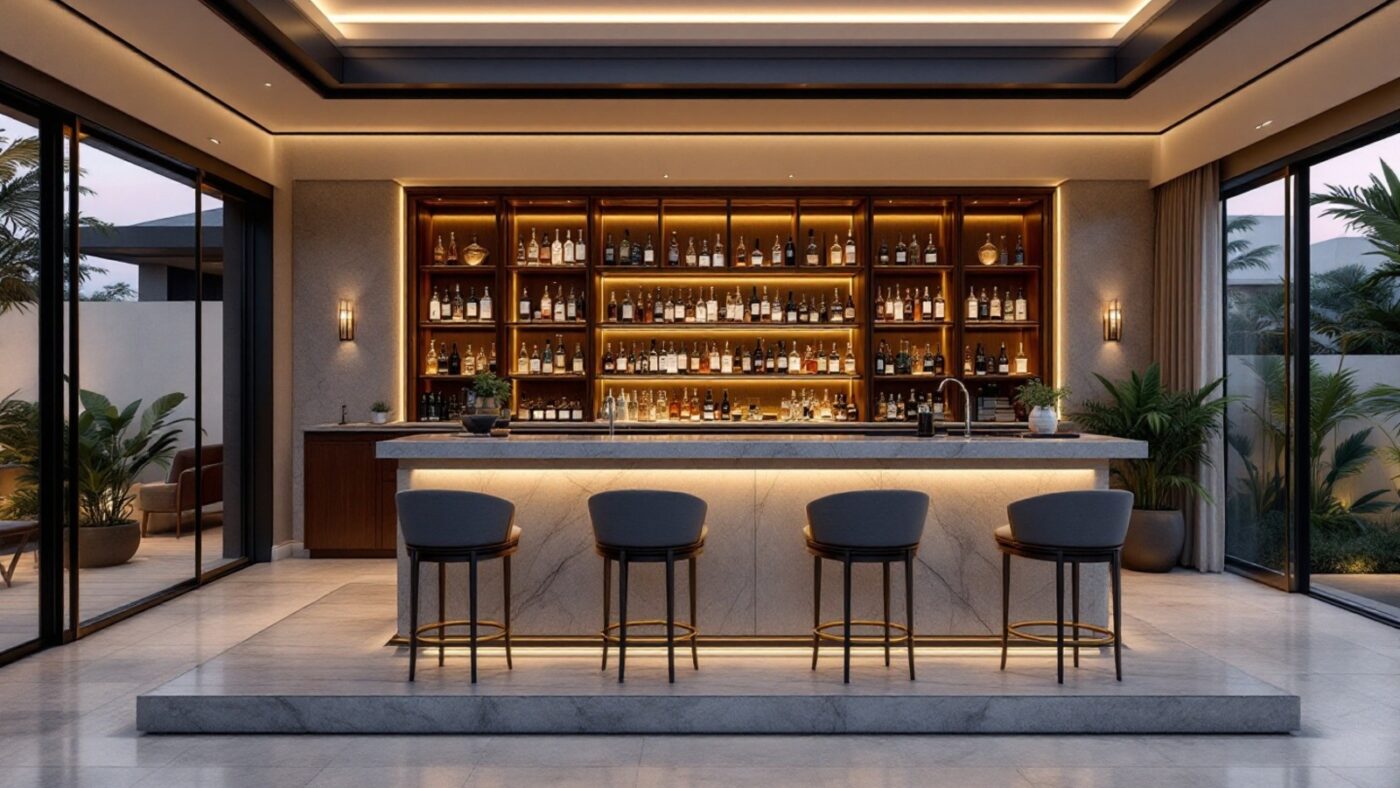
A luxury home bar in Lagos or Abuja must handle heat, humidity, dust and variable power while supporting real entertaining. The space works only when the furniture, layout and service flow are planned together from the start. Random pieces placed against a wall rarely deliver the calm, usable result that high-end homes need.
For homes in Ikoyi, Victoria Island, Banana Island, Lekki and Abuja, the bar often becomes the centre of evening gatherings. It needs to feel welcoming for both quick family drinks and longer formal hosting without showing wear after one season of use.
Treat the bar as an extension of the main living area
The biggest error is treating the bar as an isolated feature. A bar that feels disconnected from the living or dining room will see less use and look out of place.
Start by deciding the primary role:
- Casual family drinks after work.
- Formal pre-dinner hosting.
- Weekend entertaining with guests.
- A quiet reading or work corner with drinks.
- An extension of the outdoor terrace.
Each role needs different seating height, surface depth, lighting level and circulation space. A family bar can be softer and more flexible. A formal bar needs cleaner sightlines and better service access from the kitchen.
Choose materials that survive humidity and dust
Home bar furniture in Nigeria needs discipline. The material must cope with moisture, dust, heat and regular cleaning. A cabinet that looks perfect in a catalogue can fail quickly if the finish is not suitable for the environment.
Strong options include:
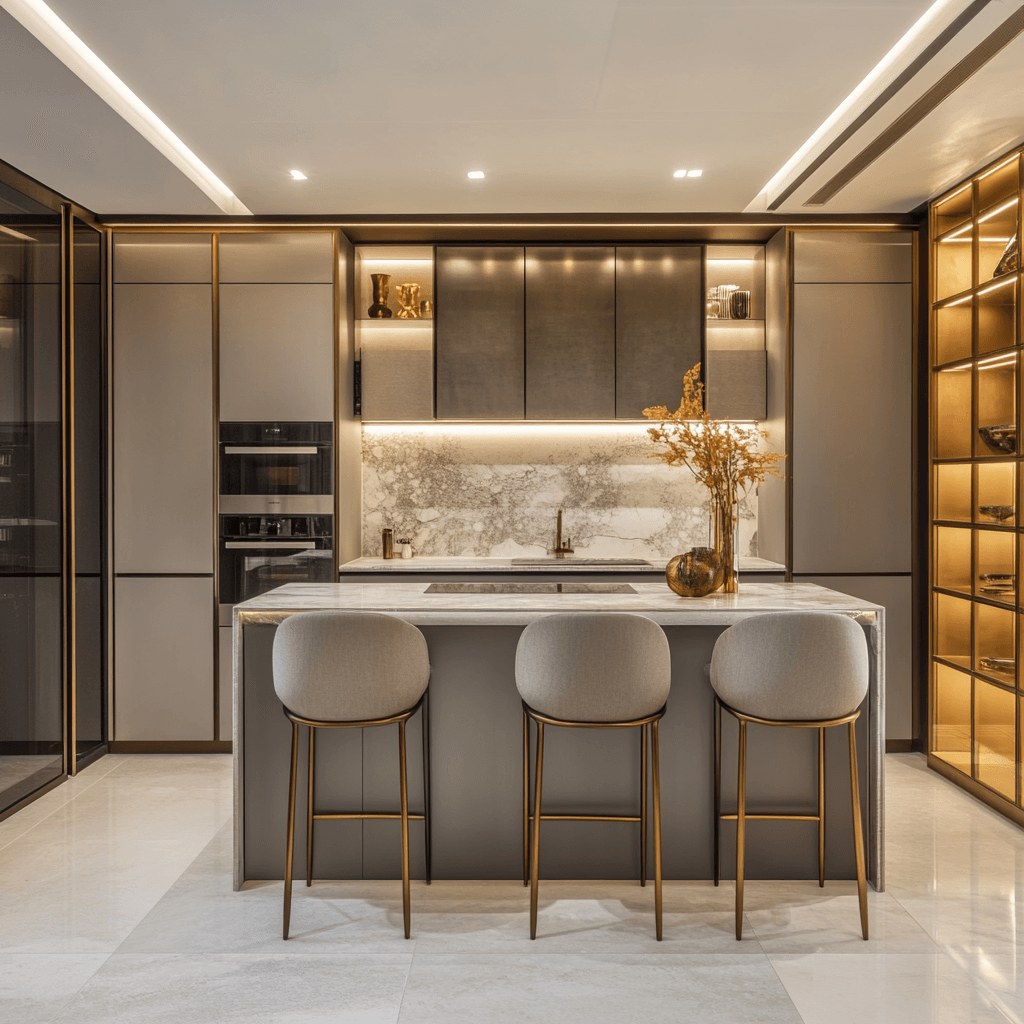
- Powder-coated aluminium or steel frames for clean lines and low maintenance.
- Treated hardwood or walnut where warmth is needed.
- Performance fabrics or leather on seating with removable covers.
- Stone, quartz or compact laminate for bar tops.
- Glass or mirrored surfaces only where they can be cleaned easily.
Do not judge by appearance alone. Ask how the frame handles humidity, how the finish ages, how glassware can be stored safely and how heavy pieces need to be for stability.
Plan seating that supports long conversations
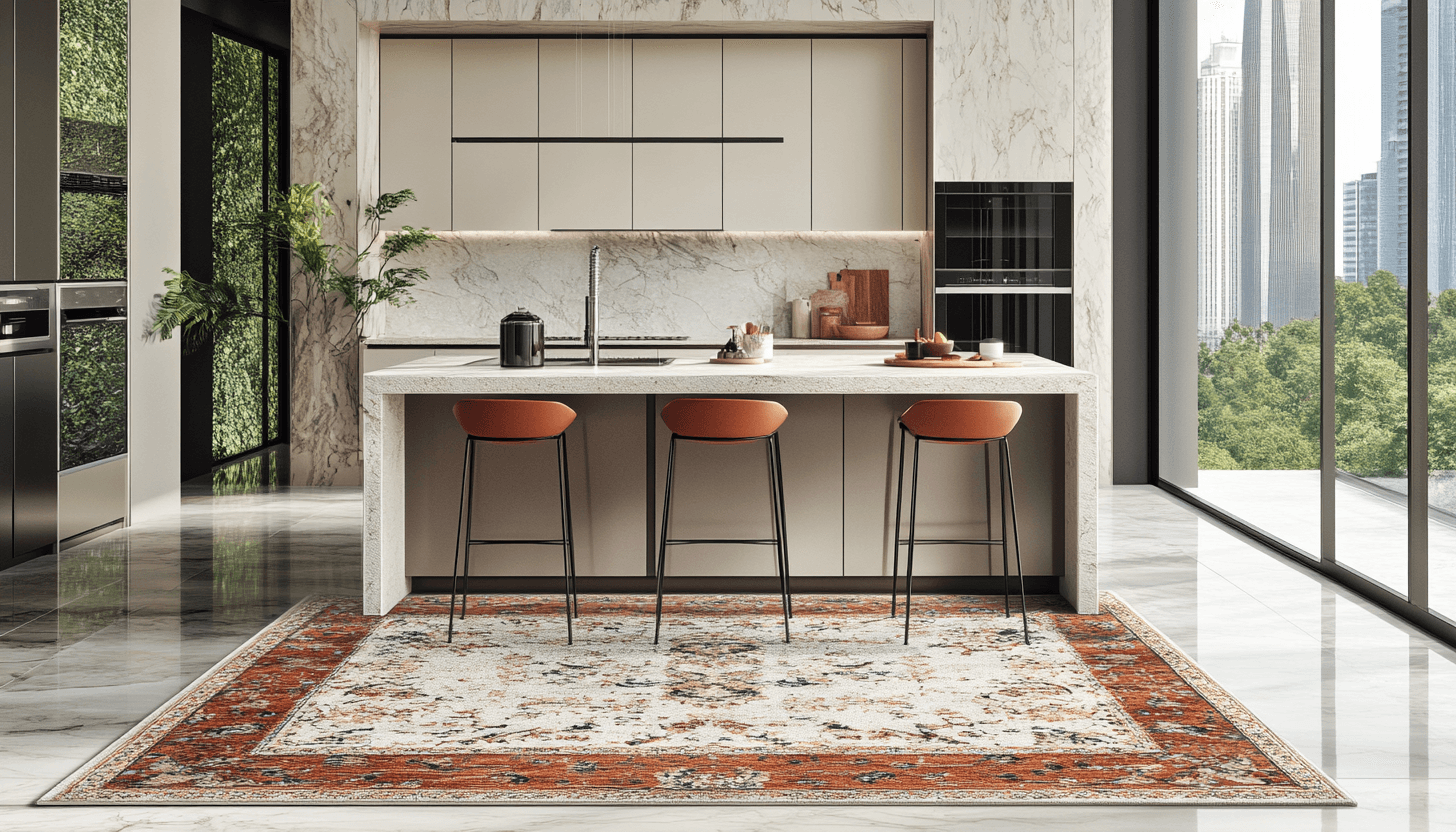
Bar stools and seating must be comfortable for extended use. In Nigerian homes, guests often stay for hours, so the height, back support and footrest matter more than looks alone.
Good seating choices:
- Adjustable height stools with sturdy bases.
- Low armchairs or banquette seating for relaxed zones.
- Mix of bar height and standard height for flexibility.
- Cushions or upholstery that can be wiped or removed.
Place seating so guests can face each other or the bar without blocking service routes. Leave enough space for people to stand and chat comfortably.
Design the bar top and serving surface first
The bar top is the working surface. It must be durable, easy to clean and the right height for both standing and seated use.
Common heights:
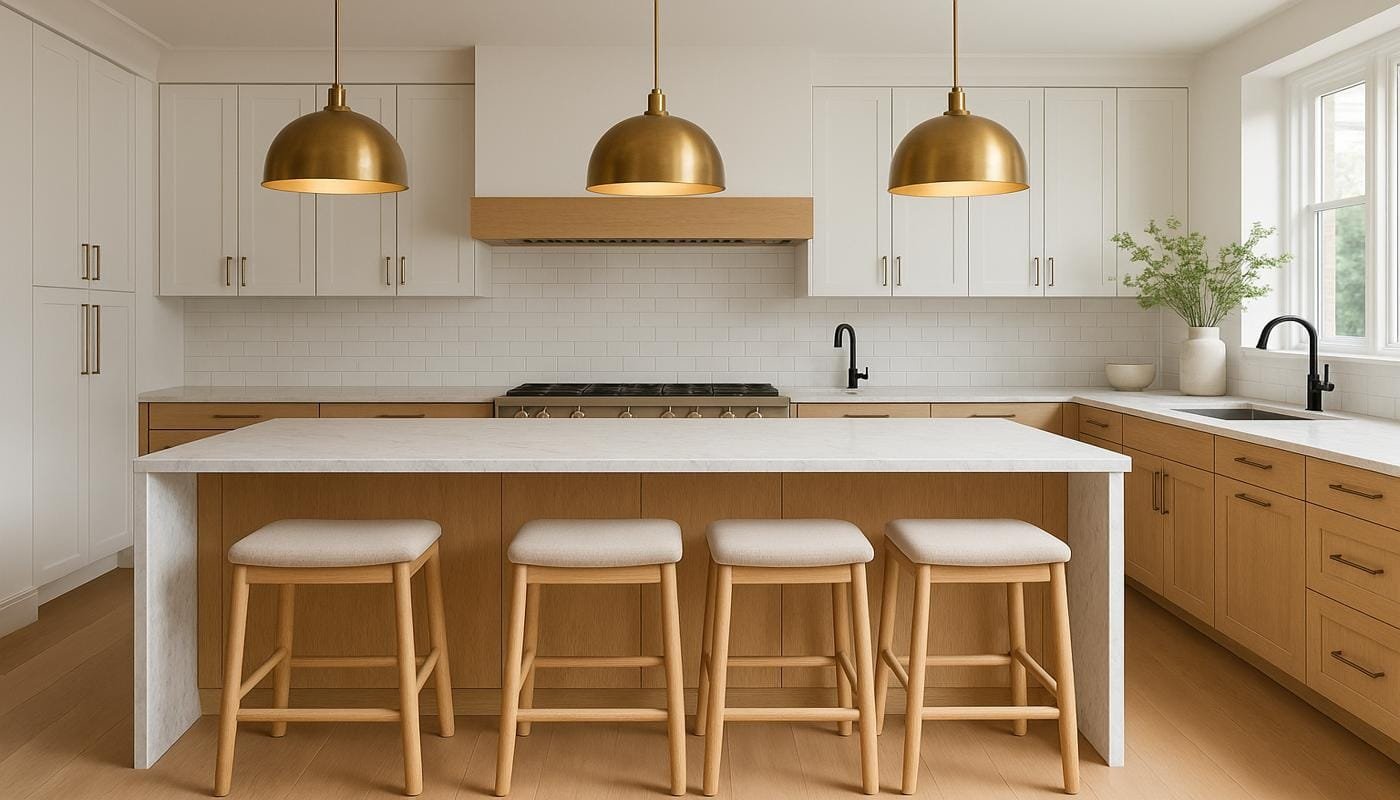
- 90 to 110 cm for standing service.
- 75 to 85 cm for seated dining style.
Choose a material that resists rings from glasses and is simple to maintain. Allow enough depth for bottles, ice buckets and serving trays without crowding the surface. A narrow top looks elegant but often fails in practice.
Build storage for bottles, glassware and tools
A bar collects objects quickly. Bottles, glasses, shakers, napkins, coasters, ice tools and cleaning supplies all need a dedicated place.
Storage ideas that work in Nigerian homes:
- Closed cabinets to protect from dust.
- Open shelving only for display pieces that are used often.
- Pull-out drawers for tools and small items.
- A dedicated wine or spirit fridge if power stability allows.
- Wall racks or under-counter storage for heavy bottles.
Plan the storage before the furniture arrives. A bar without proper storage quickly looks cluttered and difficult to use.
Layer lighting so the space works after dark
Lighting makes or breaks a home bar. It should highlight the bottles, flatter faces around the seating and guide movement without creating glare.
Better lighting uses layers:
- Warm ambient lighting above the bar.
- Task lighting for the serving surface.
- Low-level lighting for seating areas.
- Accent lighting on feature bottles or artwork.
- Dimmable controls for different moods.
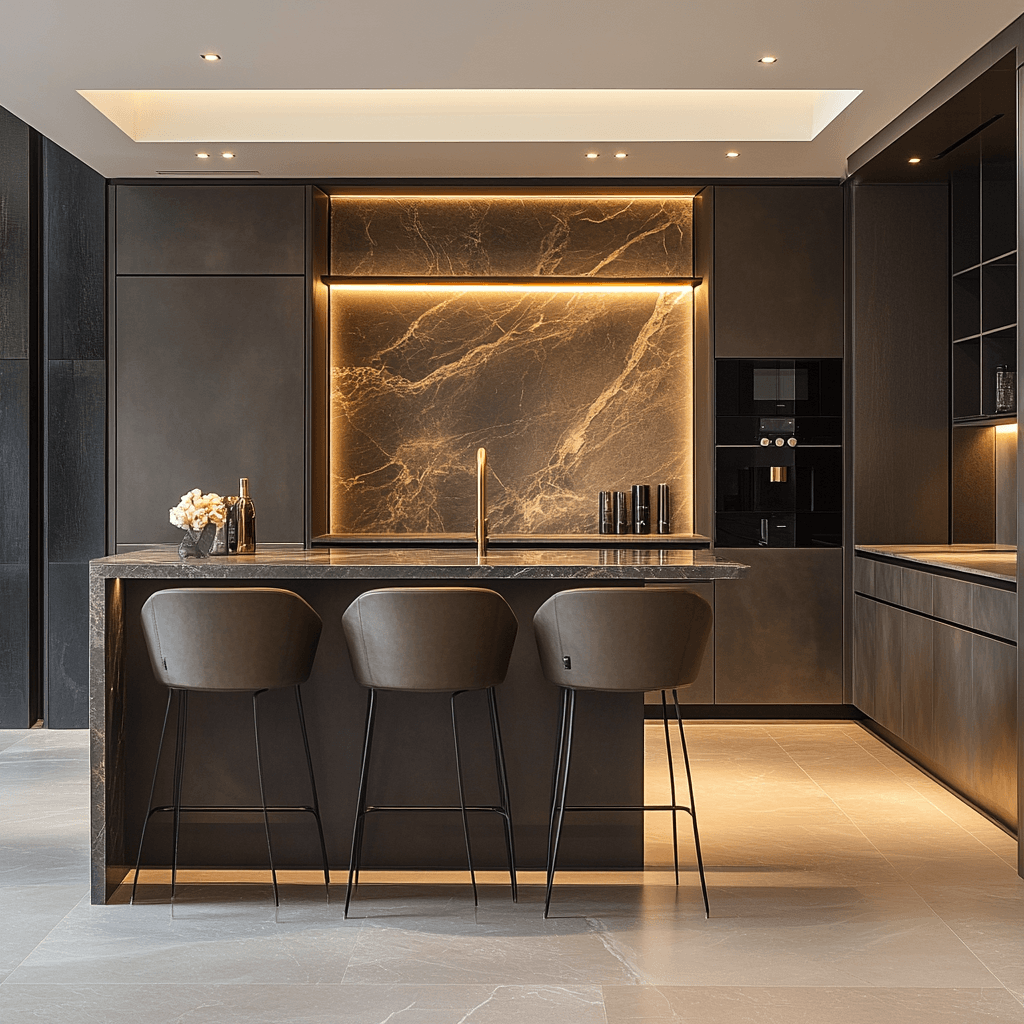
Avoid cold white light. Warm tones suit evening hospitality better and work well with wood and stone finishes common in Lagos and Abuja homes.
Account for power, refrigeration and service flow
Power fluctuations and the need for refrigeration affect every bar plan. A bar that relies on constant electricity for cooling or lighting will disappoint if the supply is unstable.
Practical steps:
- Place the bar near a reliable power point or generator line.
- Choose a small under-counter fridge only if backup power is available.
- Keep ice and backup supplies in a nearby service area.
- Design the layout so staff or family can move from kitchen to bar without crossing guest areas.
A bar that requires constant running around for ice or glasses loses its appeal fast.
Connect the bar to the overall interior scheme
The bar should feel like part of the home rather than an add-on. Coordinate the finishes with the living room or dining area.
Match undertones, metal colours, wood tones and fabric textures. A bar that uses the same stone or timber as the main room feels intentional and expensive. A mismatched bar looks like an afterthought even if the pieces are high quality.
Plan for cleaning and maintenance access
Bars collect spills, dust and fingerprints. The design must allow easy cleaning without moving heavy furniture every week.
Good practice:
- Choose wipeable surfaces and removable cushions.
- Leave space behind or under the bar for vacuuming.
- Use glass or mirrored backs only where cleaning is simple.
- Avoid intricate carvings or open shelving that traps dust.
A bar that is difficult to clean will lose its luxury feel within months.
What FCI Nigeria would plan first
Before selecting any bar furniture, resolve the fundamentals:
- Location and connection to the main entertaining areas.
- Primary use and guest numbers.
- Material durability for local climate.
- Storage needs and service routes.
- Lighting scenes and power reliability.
- Connection to the existing interior palette.
- Cleaning and maintenance access.
This sequence protects the budget and makes every chair, cabinet, stool and light have a clear purpose.
Conclusion
A luxury home bar in Lagos or Abuja should feel calm, durable and ready for real use. The best results come from planning location, materials, seating, storage, lighting and service flow as one system rather than buying pieces in isolation.
Speak with FCI Nigeria about planning a home bar, entertainment area or full interior scheme for a high-end home in Lagos or Abuja.
Get in touch
Want to get in touch? We'd love to hear from you. Email us at [email protected]
Sign Up for Newsletter