

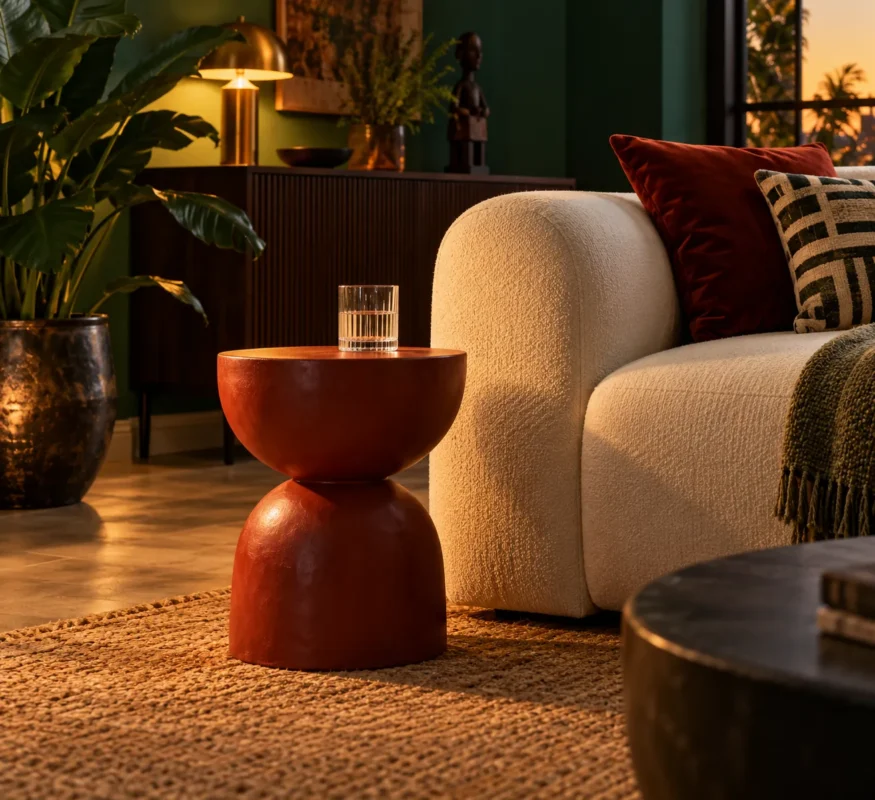
TL;DR: Choose a side table by testing its height, reach and full footprint beside your actual sofa, then check the base, surface care and any drawer or lamp requirements.
Key takeaways
- Side-table height should be tested against the sofa and the seated user, not chosen from a photograph alone.
- A C-shaped table needs both under-sofa clearance and a usable tabletop position.
- A lamp, book and drink need a surface plan, not just an attractive tabletop.
- The base can occupy more floor space than the top suggests.
How do you choose a side table for a Lagos living room?
Choose the table for a particular seat and everyday task before choosing its finish. Start by deciding whether it will hold a drink, carry a reading lamp, store remotes or provide an occasional working surface.
For a Lagos living room that doubles as a family gathering space, our recommendation is to map the route through the seating group before adding another piece. A compact tabletop is not a compact arrangement if its base sits in the route to the next chair.
Mark the complete table footprint beside the sofa, including projecting feet. Then sit, reach towards the proposed surface and stand up normally. The test is ordinary use, not whether you can negotiate the furniture with sufficient determination.
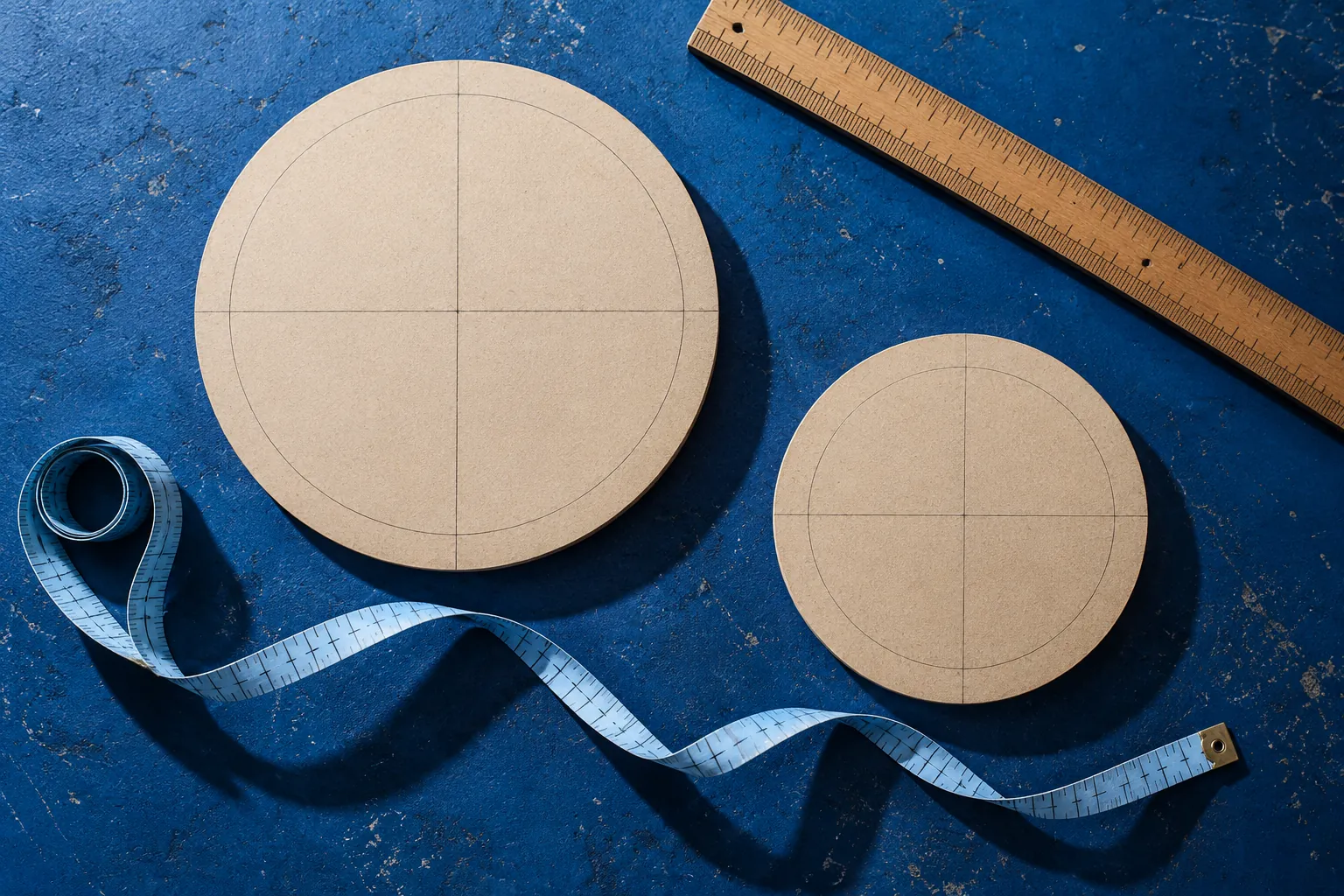
Browse FCI Nigeria's side tables with that position in mind. Request dimensions for the exact version you are considering rather than assuming that related models have the same proportions.
What height should a sofa side table be?
The useful height is the one that works with the sofa arm and the person sitting beside it. Our recommendation is to test the surface at its proposed height rather than apply a single number to every sofa.
Measure the sofa arm separately from the seat cushion. If the arm is wide or high, also check the sideways reach to the tabletop. A table can align neatly with the arm and still put a glass awkwardly far away.
Local product listings illustrate why the model matters: Wooddesignes' Nina side table specifies its own dimensions and height. That is a product-specific measurement, not a standard for every Lagos home and not a specification for FCI's range.
Trial the height with a stable temporary surface and the objects you expect to use. Keep drinks and fragile items out of an improvised trial until the arrangement is secure. Approve the actual table's suitability before purchase.
Will a C-shaped side table slide under your sofa?
It will work only if the base clears the sofa and the upper surface reaches a useful position. Do not decide from the letter-shaped silhouette alone.
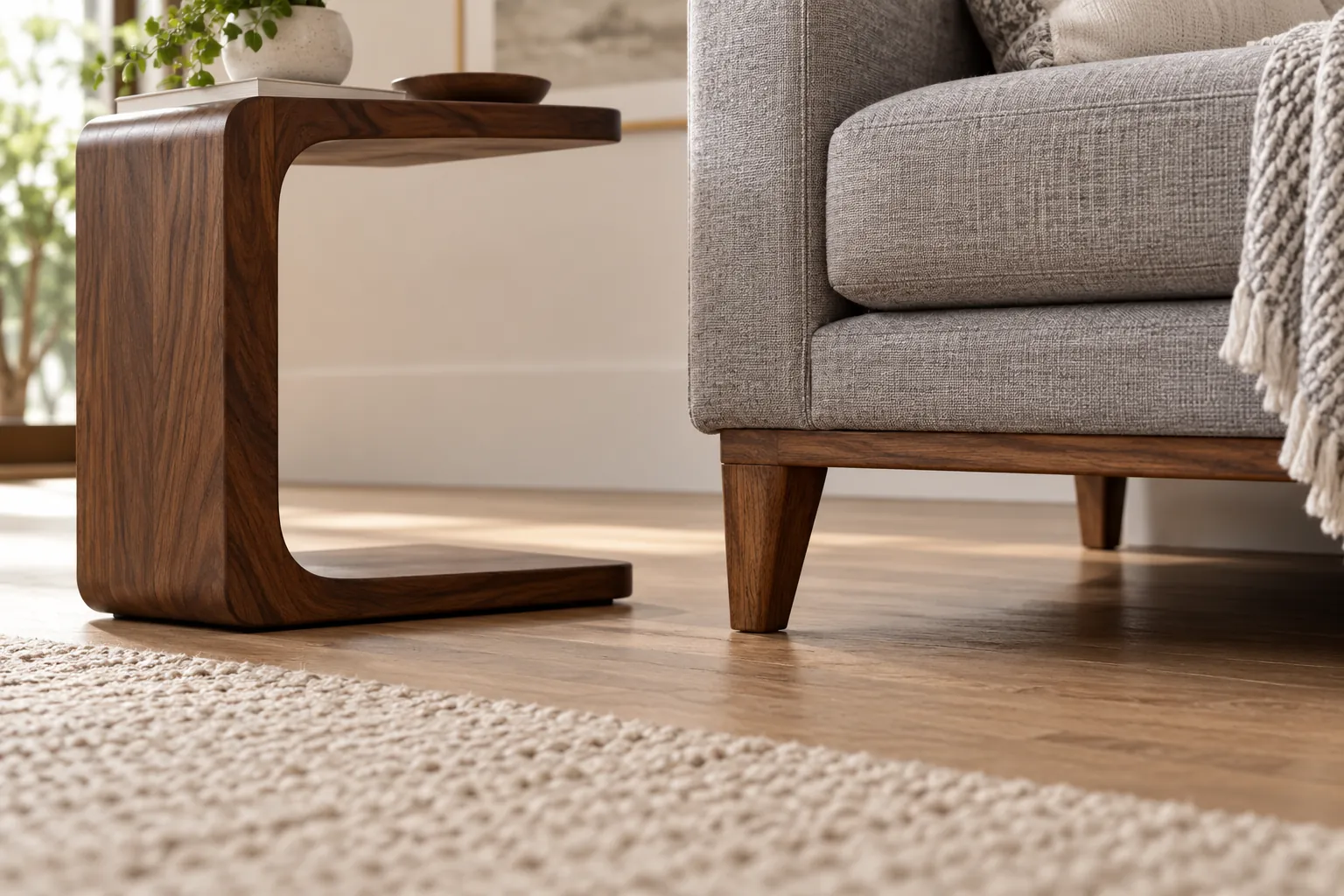
Our suggested checks are the gap beneath the sofa, the base thickness, the distance available before a sofa leg or rail interrupts travel, and the resulting position of the top. Record where the supporting upright sits relative to the sofa arm and the user's legs.
Check the floor finish and any rug as part of the trial. Ask the supplier about the precise base, glides and permitted use. Do not assume that a lightweight-looking table is suitable for sitting, leaning or supporting equipment unless the manufacturer says so.
For a different seating layout, a freestanding table may be the simpler answer. The point is a useful surface, not winning an argument with the sofa's underside.
How much tabletop space do you actually need?
You need enough usable surface for the intended objects without crowding their edges or controls. Our recommendation is to lay out a lamp-base template, closed book, coaster and any charging equipment at full size before approving the table.
A lamp changes the brief. Include its base footprint, switch position, cable route and nearby socket in the plan. Ask the relevant supplier or installer about electrical requirements rather than stretching a lead across the walking route as an afterthought.
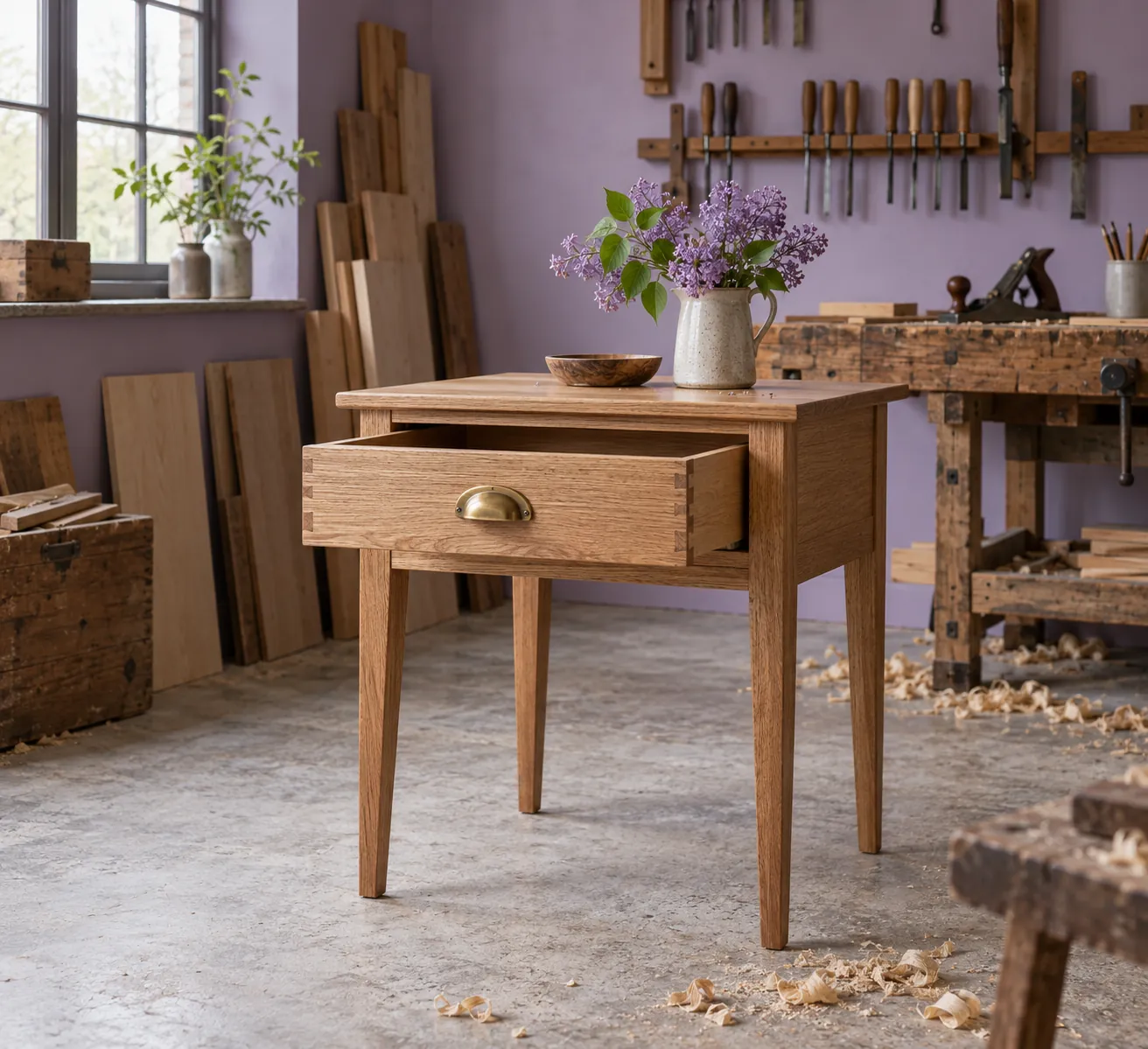
If a drawer is proposed, check the usable internal space and the opening position. A shallow drawer may suit remotes while being unsuitable for the objects you intended to hide. Storage is a dimensional question before it is a styling benefit.
Should a side table match the coffee table?
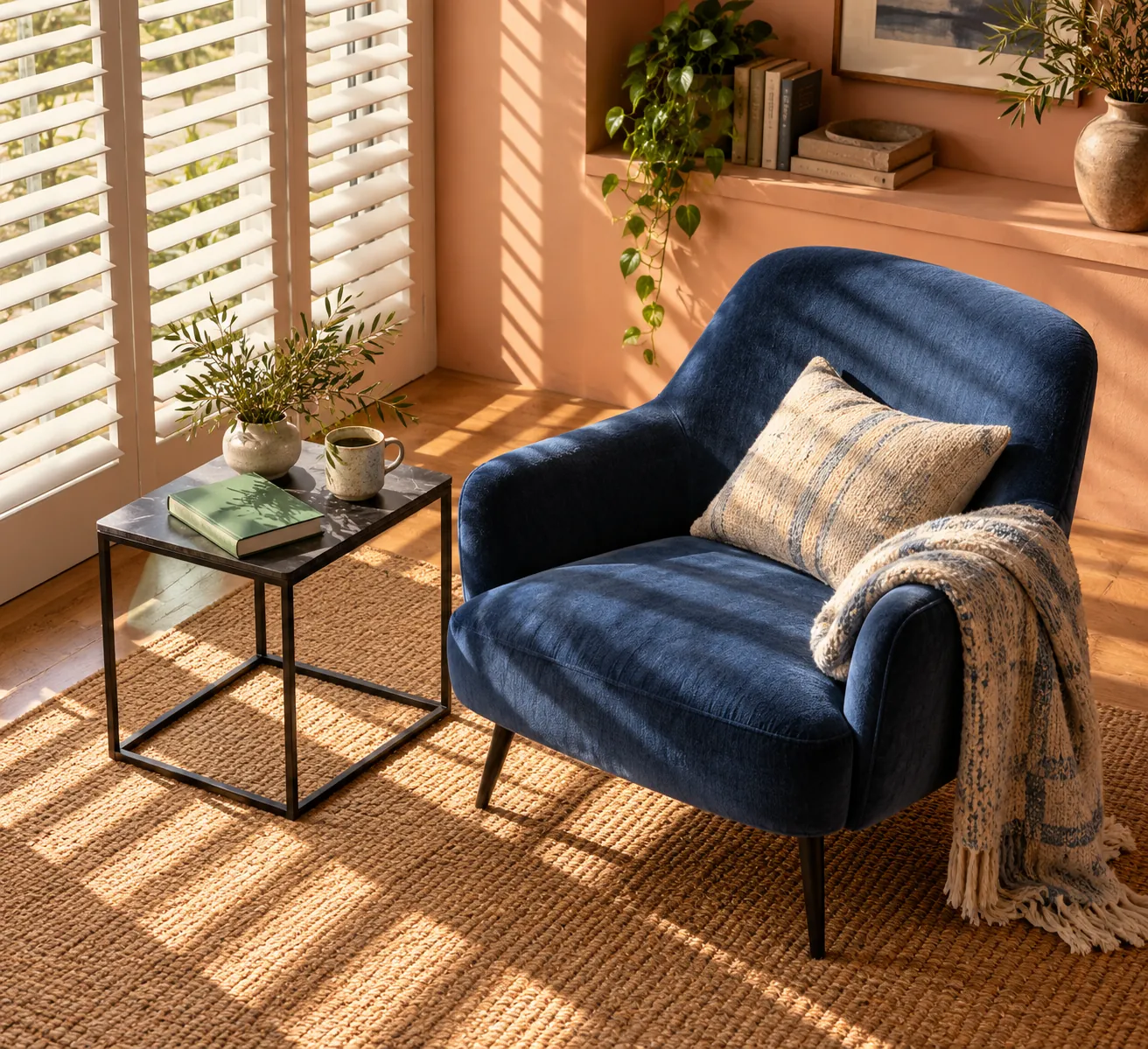
Matching is optional; a coherent arrangement matters more than identical finishes. Our recommendation is to judge the two tables by their separate jobs, then compare their shapes, materials and visual weight.
A coffee-table layout addresses the centre of the seating group. A side table serves a particular seat. Buying both from the same collection does not establish that either is correctly positioned.
For a Lagos home being furnished in stages, record the existing sofa and central table dimensions before selecting the additional piece. That gives the designer a real constraint to solve rather than a photograph to imitate.
What should you ask about the finish?
Ask for the care instructions for the exact surface and finish being quoted. Do not transfer a cleaning method from another timber, stone, metal or coating because the colour looks similar.
Include the intended use in the enquiry: drinks, a lamp, frequent repositioning or an occasional tray. Ask about permitted loads, surface protection and any restrictions on cleaning products. Confirm delivery access and assembly separately rather than reading a category listing as a delivery promise.
Limitations
These are planning recommendations, not universal ergonomic dimensions, material-performance guarantees or product load ratings. The external product example does not indicate FCI stock or pricing. Fit, care, availability and delivery arrangements need confirmation for the selected piece and property.
What should you send with an enquiry?
Send the sofa's arm and seat measurements, a room photograph, the available floor area and a short list of the objects the table must hold. Include any rug, socket and drawer-opening constraints.
Contact FCI Nigeria with that brief to discuss suitable side tables and their current specifications before ordering.
Get in touch
Want to get in touch? We'd love to hear from you. Email us at [email protected]
Sign Up for Newsletter